Why the Neurotypical World Can Be Overwhelming for Autistic People
Understanding the hidden psychological, emotional, sensory and physical challenges of entering a predominantly neurotypical world.
1. Introduction
For many neurotypical (NT) individuals, leaving home to shop, travel, attend appointments or meet friends requires relatively little conscious preparation. For some autistic individuals the same activities involve considerable psychological, emotional, sensory and physical challenges.
The reluctance to enter the neurotypical world should not be interpreted automatically as a lack of confidence, an unwillingness to socialise or a disinterest in other people. It may instead reflect an understandable response to inaccessible environments. Autistic experiences vary considerably; not everyone experiences these difficulties or avoids going out.
2. Two very different worlds
Although autistic and neurotypical individuals inhabit the same physical world, their experiences of that world can differ considerably.
Many aspects of society have developed around neurotypical expectations relating to communication, social interaction, behaviour and the ability to tolerate everyday environments.
Consider a busy city centre. There may be hundreds of people walking in different directions, vehicles sounding their horns, aircraft flying overhead, workmen operating machinery, flashing advertising displays and numerous unfamiliar smells from food outlets, perfumes, traffic fumes and pollution.
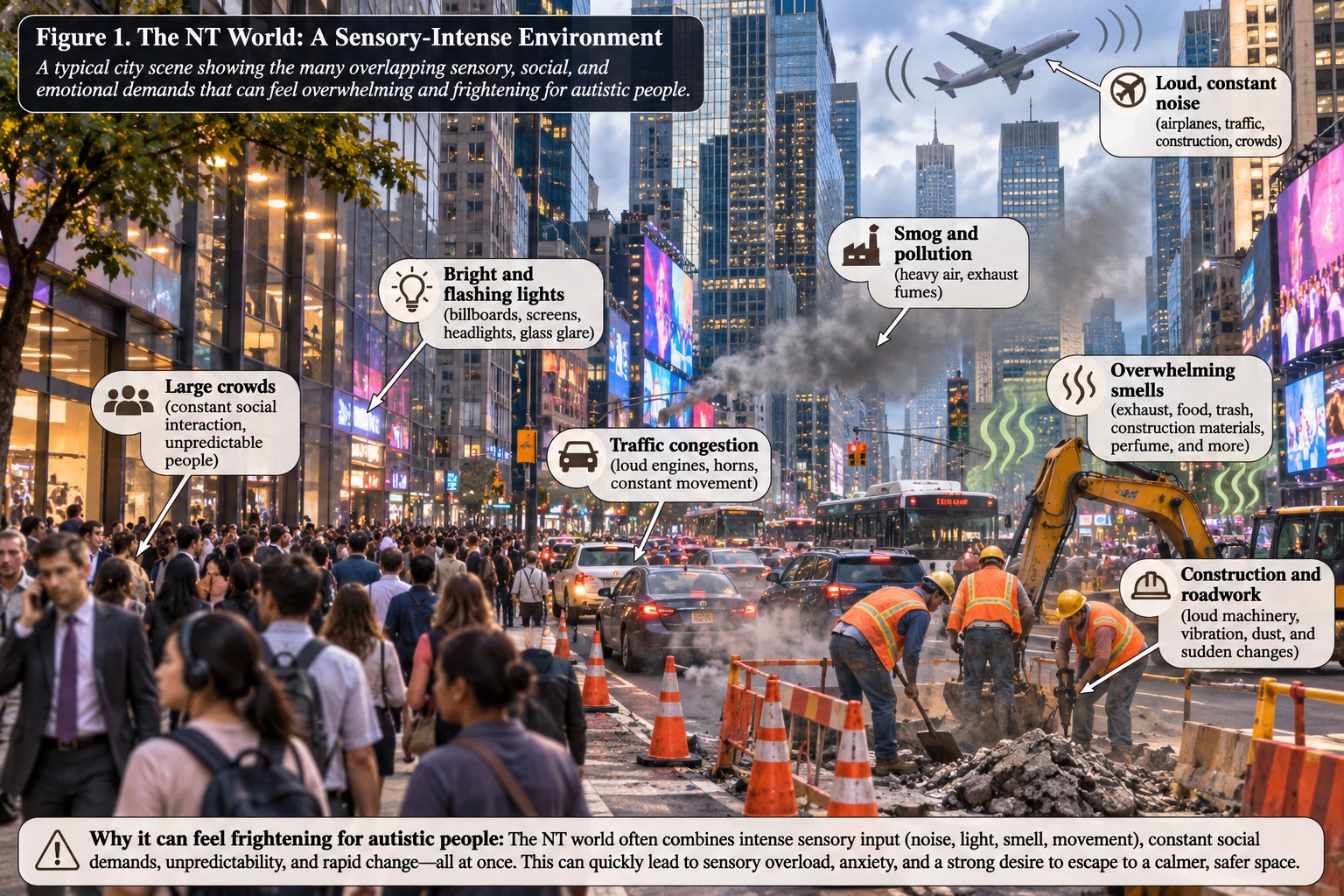
AI-generated illustration. Royalty-free for use in presentations and publications.
Click on the image above to view an enlarged version in a new tab.
Whilst many neurotypical individuals may be able to filter out much of this background stimulation, some autistic individuals experience considerable difficulty doing so. The combined effect of competing sensory demands can be more distressing than any single stimulus. 2,3
| Familiar personal environment | Busy external environment |
|---|---|
| Controlled lighting and noise | Bright lights and competing sounds |
| Familiar smells | Unpredictable smells |
| Personal space | Crowds and accidental contact |
| Predictability | Unexpected changes |
| Freedom to behave naturally | Social expectations |
| Control over sensory experiences | Limited control over stimulation |
3. Fear of the unexpected and loss of environmental control
Predictability enables an individual to prepare mentally and emotionally. A delayed appointment, cancelled train, unfamiliar visitor or sudden change in plans may remove that preparedness. Even having to make an immediate decision can be demanding.
Research associates difficulty tolerating uncertainty with anxiety in autistic people. 1 At home, an individual may choose the lighting, temperature, noise and proximity of others. Outside, many of those decisions are made by other people. Needing control over one’s own surroundings is not the same as wanting to control others.
4. Sensory overload
Sensory input can be uncomfortable, distressing or physically painful. Autistic sensory profiles differ: some people seek particular sensations whilst finding others intolerable. Tiredness and stress can also alter tolerance. 2
| Sensory experience | Potential difficulties |
|---|---|
| Sound | Traffic, alarms and competing conversations |
| Vision | Bright or flashing lighting |
| Smell | Perfume, cleaning products and fumes |
| Touch | Crowds and accidental contact |
| Vestibular experiences | Escalators, lifts and moving vehicles |
| Temperature | Unexpected heat or cold |
| Combined stimulation | Supermarkets, restaurants and public events |
Overload can interfere with concentration, communication and decision-making. Previous painful experiences may make an individual reluctant to return to a particular location. An apparently ordinary environment may therefore represent a substantial accessibility barrier.
5. Fear of misunderstanding, judgement and rejection
Differences in communication, including direct language, tone of voice, facial expression and interpretation of social cues, can lead to mutual misunderstandings. An autistic individual may fear being perceived as rude, insensitive or uncooperative when no offence was intended.
Experiences of bullying, ridicule, discrimination and exclusion may create a heightened awareness of other people’s reactions. Repeated negative encounters may lead to withdrawal as a means of self-protection. Research into public environments and social camouflaging describes the effects of judgement and the desire for acceptance. 3,4
Avoiding a hostile situation may be a sensible decision. The concern arises when fear also begins to prevent access to desired friendships, employment, education or essential services.
6. Fear of meltdowns, losing emotional control and avoidance
An autistic meltdown is an involuntary response to overwhelming demands, not a deliberate tantrum. A shutdown may involve withdrawal or a temporary inability to speak or respond. Previous episodes in public can create fear of embarrassment, attracting attention or being unable to communicate. 7
Knowing that an exit is available can provide reassurance. Public transport, formal meetings, crowded restaurants and medical waiting rooms may feel particularly difficult when leaving seems impossible.
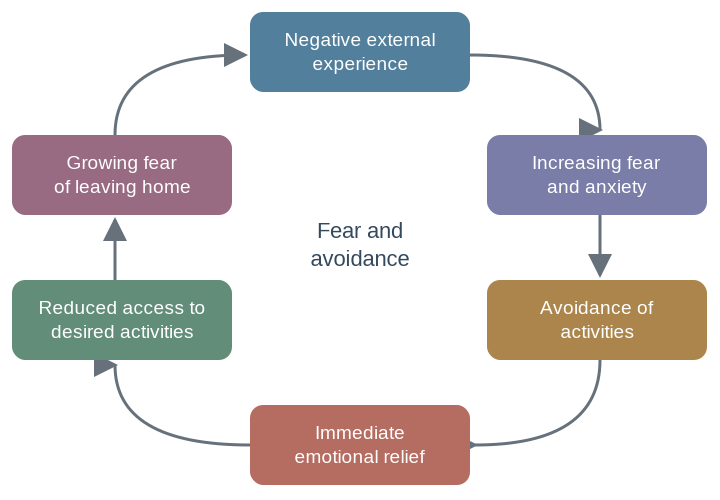
Illustrative model; not measured scientific data.
Cancelling an activity can bring immediate relief. When avoidance repeatedly prevents participation in activities the person wants or needs, anxiety may persist or increase. This is distinct from choosing to avoid genuinely harmful sensory environments. 2,3
Persistent distress, panic or inability to undertake essential activities may warrant autism-informed professional support. Adjusting the environment should be considered before encouraging participation; forced exposure to overwhelming conditions may worsen distress.
7. Anticipatory anxiety
Distress may start hours or days before leaving home. The individual may investigate a venue, rehearse conversations, check transport and mentally consider possible difficulties. Such planning can be helpful but may become exhausting when uncertainty cannot be resolved.
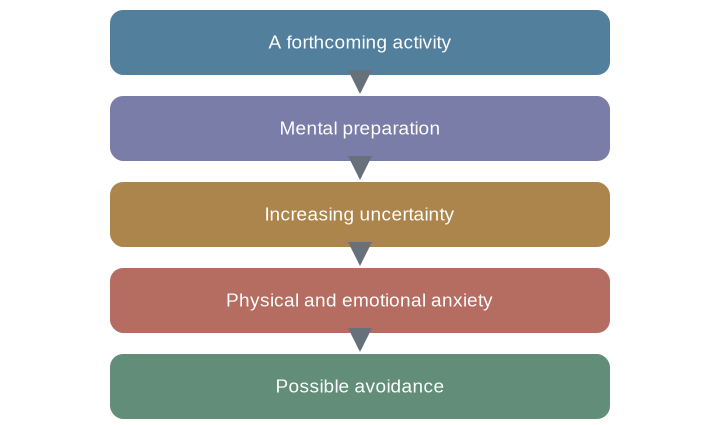
Illustrative model; not measured scientific data.
By the time the activity begins, the individual may already have used considerable mental energy. Clear information and realistic contingency plans can reduce unnecessary uncertainty. 1,3
8. The psychological cost of autistic masking
Masking or camouflaging involves suppressing or adapting natural autistic characteristics to meet perceived social expectations. It may involve monitoring eye contact and facial expressions, rehearsing responses, suppressing stimming or concealing sensory discomfort.
Research by Hull and colleagues describes how camouflaging may help people seek acceptance and connection, whilst also contributing to exhaustion and difficulties with self-perception. 4
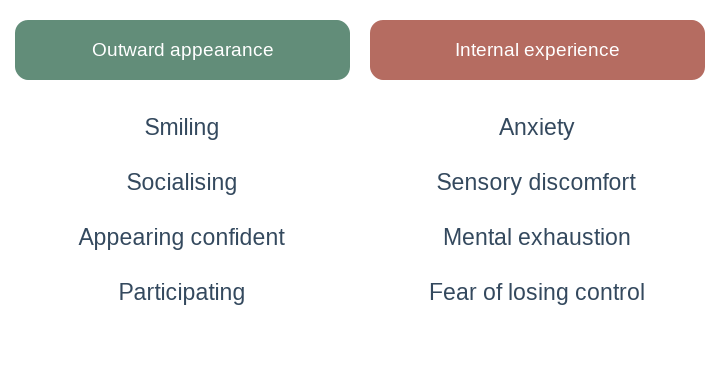
Illustrative model; not measured scientific data.
A person who appears confident and sociable may be expending considerable effort to maintain that appearance. Their outward behaviour is not necessarily an accurate indication of their wellbeing.
9. Physical and mental exhaustion
Sensory processing, travel, communication and self-monitoring can all place demands on available energy. Even enjoyable activities may require a lengthy recovery period. A person may want to meet friends but recognise that the outing could leave them unable to complete other responsibilities.
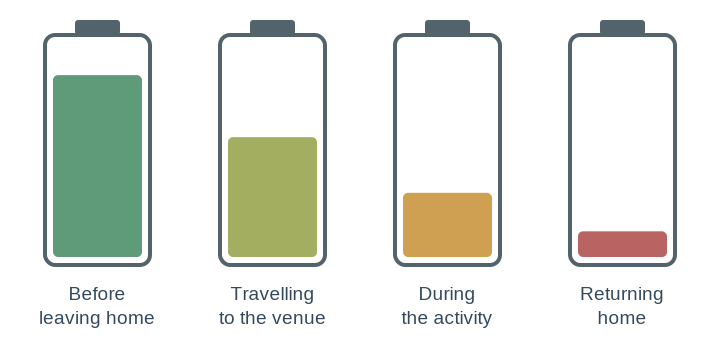
Illustrative model; not measured scientific data.
When demands remain high and adequate support or recovery is unavailable, some autistic individuals experience burnout, involving prolonged exhaustion, reduced functioning and increased sensitivity to stimulation. 5,6 New or persistent fatigue should also be assessed for other possible health causes.
10. The body’s response to perceived danger
The autonomic nervous system helps prepare the body to respond to perceived threats. A threatening experience need not involve immediate physical danger: uncertainty, distressing sensory input and previous adverse experiences can contribute to a stress response.
Possible symptoms include rapid heartbeat, sweating, muscular tension, nausea, altered breathing and difficulty concentrating. Fight, flight and freeze are simplified descriptions of protective responses, not a diagnosis or a complete explanation of autistic meltdowns.
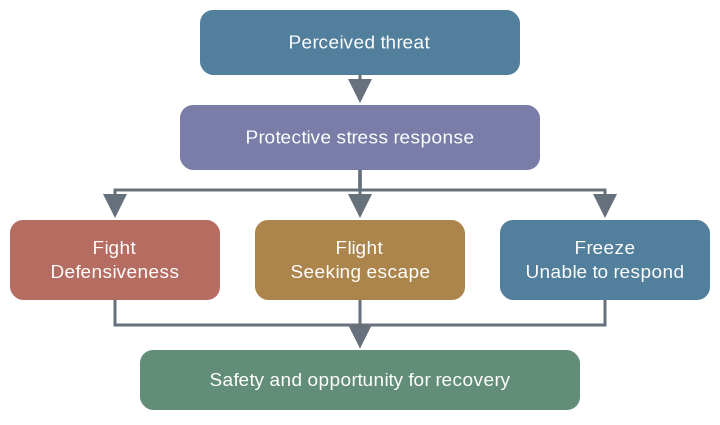
Illustrative model; not measured scientific data.
A person may understand intellectually that a situation is safe whilst still experiencing a powerful physical reaction. Reducing demands and enabling access to a safe environment can help them regain stability.
11. Making the neurotypical world more accessible
Responsibility for participation should not rest solely on autistic individuals. NICE guidance recommends adapting the sensory and physical environment to individual needs. 8
| Environment | Potential adjustments |
|---|---|
| Supermarkets | Quiet shopping hours and reduced music |
| Healthcare | Quiet waiting areas and predictable procedures |
| Employment | Flexible working and suitable workspaces |
| Education | Sensory breaks and quiet rooms |
| Public transport | Clear information about changes |
| Social events | Smaller groups and freedom to leave |
| Meetings | Advance agendas, breaks and remote participation |
| Public buildings | Accessible quiet spaces |
Before an activity, provide information about the location, duration, likely attendees and available facilities. Agree an alternative plan and allow the person to leave without judgement. Autistic-led groups and shared-interest activities may offer enjoyable opportunities for connection.
Families, partners, carers and friends can help by asking what would make an activity manageable rather than insisting that the individual should simply go out more. Respecting personal preferences and recognising the need for recovery can support sustainable participation.
12. The Author’s Personal Experience
The author travelled into a large city with their partner to attend a meeting. The intention was to attend the meeting and subsequently travel by bus to the Park and Ride facility, before continuing their journey home.
Unfortunately, the meeting overran and, upon leaving the building, they found themselves entering the early stages of the evening rush hour. There were large numbers of people queuing at the bus stop, increased volumes of traffic and an intensification of the usual background noise associated with a busy city environment.
The author became increasingly agitated. Recognising the early signs of distress, their partner suggested moving away from the main thoroughfare and spending some time in a quieter café. However, the author's brain was already becoming overwhelmed by the surrounding sensory stimulation. Their overriding desire was to leave the city as quickly as possible. Although the author knew exactly what they wanted to do, they were finding it increasingly difficult to translate their thoughts into spoken words and communicate their intentions to their partner. Much of their mental energy was being directed towards trying to filter out the surrounding noise. This inability to verbally express their thoughts and needs further intensified their frustration, stress and anxiety, adding to an already overwhelming situation.
When a bus eventually arrived, it was already sufficiently crowded that only standing room was available. The author closed their eyes in an attempt to reduce visual stimulation whilst trying to cope with the background noise, unfamiliar smells and close physical proximity of other passengers.
Due to the volume of traffic and the bus stopping at virtually every bus stop, a journey that would normally have taken approximately 30 minutes took over an hour. As the journey progressed, more passengers boarded than alighted, further intensifying the sensory discomfort.
Despite experiencing considerable stress and anxiety, the author managed, with increasing difficulty, to maintain outward emotional control throughout the journey. However, with every additional passenger, unfamiliar smell, intrusive noise and delay, the emotional and sensory distress continued to accumulate. An increasing amount of mental energy was being expended in an attempt to suppress these feelings and prevent a loss of emotional control.
Upon leaving the bus and entering a considerably quieter environment, the author was no longer able to contain the overwhelming build-up of stress, anxiety and sensory distress. Having reached the limits of their emotional endurance, it was as though the pressure that had been building throughout the journey suddenly exploded, resulting in an uncontrollable autistic meltdown in the street.
The meltdown was not a conscious or deliberate response, but an involuntary reaction to the cumulative effects of prolonged sensory and emotional overload. Passers-by looked on, seemingly unaware of what was happening, whilst the author's partner did their utmost to provide reassurance, comfort and emotional support.
Upon returning home, the author resolved to avoid attending meetings in the city scheduled within a few hours of the evening rush hour. Nevertheless, previous experience suggested that this resolution might only last until the next occasion when attendance at an important meeting was required.
By this stage, the author was both physically and mentally exhausted and needed to lie down and rest.
This personal experience illustrates how an apparently straightforward journey can become an extremely distressing ordeal for an autistic individual. It also demonstrates how sensory overload can temporarily impair verbal communication and how an autistic person may maintain outward emotional control in an overwhelming environment, only to experience a meltdown once the immediate demands of that environment have been removed.
13. Conclusion
For some autistic individuals, entering the neurotypical world involves adapting to environmental and social demands that can be difficult to manage. Reluctance to leave home may reflect previous experiences, anticipated distress or the need to conserve energy, rather than a rejection of society.
The objective should be to make participation possible and sustainable, not to require autistic individuals to endure environments that cause unnecessary distress.
The importance of personal comfort rooms and safe spaces will be explored in a separate companion essay.
14. Scientific articles and references
5. Raymaker et al. (2020). Defining Autistic Burnout.
15. Further reading and guidance
6. National Autistic Society – Autistic fatigue and burnout.
7. National Autistic Society – Masking.
8. NICE – Autism spectrum disorder in adults: diagnosis and management (CG142).