Sleep and Rest in Autistic People
Understanding disrupted sleep patterns, physical and mental exhaustion, coexisting medical conditions and the importance of recharging the body’s batteries.
1. Introduction
Sleep and rest are essential to maintaining physical health, emotional wellbeing and cognitive functioning. However, for many autistic people, obtaining sufficient restorative sleep can be a considerable challenge.
Whilst some autistic people experience difficulty falling asleep, others frequently awaken throughout the night, wake prematurely in the morning or experience periods of sleep that leave them feeling physically and mentally exhausted.1, 2
In addition to these difficulties, many autistic people experience considerable fatigue as a consequence of functioning within a predominantly neurotypical world. Everyday activities that non-autistic people may consider relatively straightforward can require substantial physical, mental and emotional effort from an autistic person.
Going to the supermarket, attending a medical appointment, meeting friends, travelling on public transport or participating in a social event can leave an autistic person feeling completely exhausted.
The presence of coexisting medical conditions, such as obstructive sleep apnoea and myalgic encephalomyelitis/chronic fatigue syndrome (ME/CFS), can further compound these difficulties.
Consequently, autistic people may require additional periods of sleep or rest throughout the day to replenish their energy reserves, a process that could be described as recharging their batteries.
Understanding why this occurs is essential to ensuring that autistic people receive appropriate support and are not unfairly perceived as being lazy, unmotivated or antisocial.
2. Understanding Sleep and the Sleep Cycle
Sleep is an essential biological process during which the body and brain undertake numerous restorative functions.
During sleep, the brain processes information accumulated throughout the day, consolidates memories, regulates emotions and supports the maintenance of physical and neurological health.
Sleep is divided into four principal stages.
| Stage | Description |
|---|---|
| N1 – Light sleep | The transition between wakefulness and sleep. |
| N2 – Established sleep | Heart rate slows, body temperature falls and awareness of the surrounding environment decreases. |
| N3 – Deep sleep | Important for physical restoration, immune function and recovery. |
| REM sleep | Associated with dreaming, memory processing and emotional regulation. |
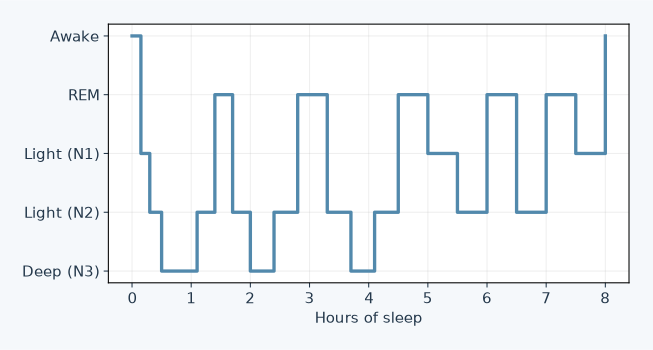
Throughout the night, an individual normally progresses through several sleep cycles, each lasting approximately 90 to 120 minutes.
When sleep is repeatedly interrupted, the individual may experience difficulty obtaining sufficient restorative sleep. Consequently, someone who has spent eight or nine hours in bed may still awaken feeling exhausted.
The quality of sleep can therefore be just as important as its duration.
3. Why Do Autistic People Experience Disrupted Sleep Patterns?
Research has consistently identified sleep difficulties as being more common amongst autistic people than the general population. However, there is unlikely to be one single explanation. Sleep disturbances can result from a combination of neurological, biological, sensory, psychological and environmental factors.1, 2
Differences in the Body’s Internal Clock
The human body operates according to an internal biological clock known as the circadian rhythm. This regulates numerous biological functions, including sleep, wakefulness, body temperature and hormone production.
Melatonin is a hormone that helps signal to the body that it is time to sleep. Its production normally increases during the evening as environmental light decreases. Research suggests that some autistic people may experience differences in the timing or production of melatonin and the regulation of their circadian rhythm.1, 2
Consequently, an autistic person may experience difficulty becoming sleepy at an appropriate time, waking at irregular intervals or maintaining a consistent sleep pattern. These differences do not occur in every autistic person.
Sensory Hypersensitivity
Sensory hypersensitivity can significantly interfere with an autistic person’s ability to fall asleep and remain asleep.3, 4
| Sensory system | Potential sleep disturbances |
|---|---|
| Auditory | Ticking clocks, snoring, traffic and electrical equipment. |
| Visual | Streetlights, illuminated clocks and standby lights. |
| Tactile | Bedding textures, clothing seams and mattress firmness. |
| Olfactory | Perfumes, washing detergents and air fresheners. |
| Interoceptive | Hunger, thirst, pain or the need to use the toilet. |
| Temperature sensitivity | A bedroom that feels excessively hot or cold. |
Whereas a non-autistic person may become accustomed to a relatively insignificant background noise, an autistic person may continue to notice it throughout the night. The anticipation of an uncomfortable sensory experience may itself contribute to anxiety surrounding bedtime.4
An Overactive or Highly Alert Mind
Many autistic people describe considerable difficulty switching off their thoughts at night. They may repeatedly analyse conversations, revisit events that occurred throughout the day, think about forthcoming appointments or concentrate intensely on a particular interest.
Although physically exhausted, the individual may remain mentally alert. This state of heightened alertness, sometimes described as hyperarousal, can interfere with the body’s transition from wakefulness to sleep.1
Stress and Anxiety
Autistic people may experience considerable stress and anxiety as a consequence of navigating unfamiliar, unpredictable or socially demanding environments. Although the stressful situation may have ended several hours previously, the nervous system may remain in a heightened state of alertness.
The individual may also repeatedly analyse what occurred, questioning whether they behaved appropriately or whether something they said was misunderstood. This can result in difficulty falling asleep, frequent awakenings, distressing dreams and an inability to return to sleep.
Coexisting Medical Conditions (Comorbidities)
Many autistic people also experience coexisting medical conditions, often referred to as comorbidities, which can further compound their existing difficulties with sleep, fatigue and physical and mental exhaustion.
Although autism-related sensory sensitivities, stress, anxiety and masking may contribute significantly to exhaustion, the presence of additional medical conditions can further reduce an individual’s capacity to function effectively and recover from the demands of everyday life.
Other conditions that may contribute to sleep difficulties include ADHD, epilepsy, chronic pain, restless legs syndrome, gastrointestinal disorders and anxiety disorders. Certain medications may also affect sleep.1
Two medical conditions that warrant particular consideration are obstructive sleep apnoea and myalgic encephalomyelitis/chronic fatigue syndrome (ME/CFS).
Obstructive Sleep Apnoea (OSA)
Obstructive sleep apnoea is a medical condition in which the airway repeatedly narrows or becomes blocked during sleep, resulting in temporary interruptions to breathing. These interruptions can cause frequent awakenings, sometimes without the individual being consciously aware of them.7, 8
Consequently, despite spending a considerable number of hours asleep, the individual may experience:
- Poor-quality and fragmented sleep.
- Excessive daytime sleepiness.
- Morning headaches.
- Difficulties with concentration and memory.
- Increased irritability.
- Persistent physical and mental exhaustion.
For an autistic person who already experiences difficulties with sensory processing, emotional regulation, stress and anxiety, sleep apnoea can further diminish their capacity to cope with the demands of everyday life.
Furthermore, some autistic people may experience sensory difficulties when using a Continuous Positive Airway Pressure (CPAP) machine, particularly in relation to the face mask, airflow, equipment noise and physical discomfort. Appropriate adjustments and gradual familiarisation with the equipment, supported by healthcare professionals, may help alleviate these difficulties.8
Myalgic Encephalomyelitis/Chronic Fatigue Syndrome (ME/CFS)
ME/CFS is a complex, chronic medical condition characterised by debilitating fatigue, unrefreshing sleep, cognitive difficulties and a range of other physical and neurological symptoms.9, 10
One of its defining characteristics is post-exertional malaise (PEM), whereby relatively minor physical, cognitive, emotional or social activities can result in a significant worsening of symptoms. This deterioration may not become apparent until several hours or even days after the activity and can persist for a considerable period.10
For an autistic person with coexisting ME/CFS, the additional demands associated with functioning within a predominantly neurotypical world may further compound their existing difficulties.
Activities such as shopping, attending appointments, socialising, masking autistic characteristics and managing uncomfortable sensory experiences may contribute to:
- Profound physical and mental exhaustion.
- Increased sensory hypersensitivity.
- Cognitive difficulties, often referred to as brain fog.
- Reduced emotional regulation.
- Unrefreshing sleep.
- Prolonged recovery periods.
- Reduced ability to undertake everyday activities.
- Increased vulnerability to sensory overload.
Unlike ordinary tiredness, the exhaustion associated with ME/CFS is not necessarily alleviated by additional sleep or rest. Carefully managing energy expenditure, pacing activities and avoiding overexertion are therefore particularly important. Individuals should not be encouraged to exceed their energy limits in an attempt to overcome their exhaustion.10
The Cumulative Impact of Coexisting Conditions
When autism coexists with medical conditions such as sleep apnoea or ME/CFS, the combined impact can be considerably more debilitating than any one condition in isolation.
An autistic person may find themselves experiencing a continuous cycle of exhaustion, disrupted sleep, reduced sensory tolerance, increased anxiety and an inability to replenish their energy reserves adequately.
It is therefore essential that healthcare professionals consider the cumulative impact of coexisting medical conditions when assessing an autistic person’s health, sleeping patterns, fatigue and individual support requirements.
Persistent exhaustion should never automatically be attributed to autism when an underlying or coexisting medical condition may be contributing to the individual’s difficulties.
4. What Is Meant by Broken Sleep?
Broken or fragmented sleep occurs when an individual’s sleep is repeatedly interrupted throughout the night. Although brief awakenings are a normal part of sleep, frequent or prolonged awakenings can reduce the restorative benefits of sleeping.
An autistic person may experience:
- Difficulty falling asleep.
- Repeatedly waking throughout the night.
- Remaining awake for considerable periods.
- Waking prematurely in the morning.
- Difficulty returning to sleep.
- Feeling exhausted despite spending sufficient time in bed.
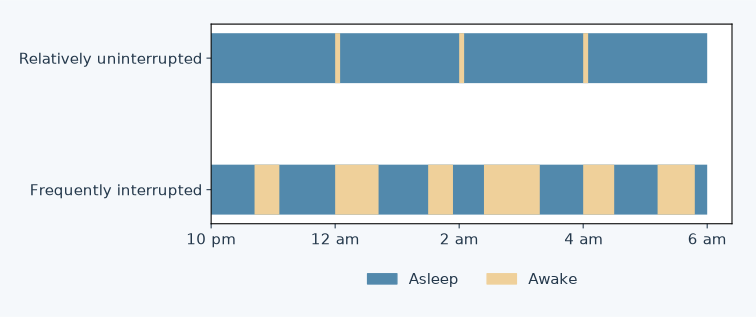
Repeated sleep disruption can have a cumulative effect upon an individual’s physical and mental wellbeing, particularly when it occurs over several consecutive nights.
5. Living in a Predominantly Neurotypical World
For many autistic people, participating in everyday society requires continuous adaptation to environments that have largely been designed around the needs and expectations of non-autistic people.
This may involve consciously monitoring behaviour, interpreting facial expressions, maintaining conversations, tolerating uncomfortable sensory experiences and attempting to conform to unwritten social expectations.
An ordinary visit to a supermarket may involve coping with bright artificial lighting, background music, crowded aisles, unexpected movements, multiple conversations, decision-making and interactions with other people.
Individually, these demands may appear relatively insignificant. Collectively, however, they can place considerable pressure upon an autistic person’s available energy and ability to regulate their sensory experiences.
The same difficulties may arise when attending social gatherings, working in busy offices, travelling or simply spending time away from the familiar surroundings of home.
The cumulative consequences may only become apparent once the individual returns to an environment in which they feel safe and no longer need to maintain the same degree of control over their behaviour.
6. Masking and Its Contribution to Exhaustion
Autistic masking, sometimes referred to as camouflaging, involves consciously or unconsciously modifying behaviour to meet the social expectations of other people.
This may involve suppressing self-regulatory movements, forcing eye contact, rehearsing conversations, monitoring body language, concealing sensory discomfort and attempting to appear relaxed despite experiencing considerable internal distress.
Maintaining this appearance can require substantial cognitive and emotional effort.5
An autistic person may successfully participate in a social event for several hours, appearing confident, relaxed and sociable to those around them. However, this outward appearance may conceal increasing levels of stress, anxiety and exhaustion.
Upon returning home, the individual may experience an overwhelming need to withdraw, lie down or sleep for several hours. This need for recovery should not be interpreted as a lack of interest in other people or an unwillingness to participate in everyday activities.
The energy required to appear to be coping should never be underestimated.
7. Recharging the Batteries – Why Autistic People May Need Additional Rest and Sleep
One of the most effective ways of explaining autistic exhaustion is to compare the body’s available physical, mental and emotional energy to a rechargeable battery.
Every individual begins the day with a certain amount of available energy. However, the amount of effort required to undertake particular activities can differ considerably between autistic and non-autistic people.
For an autistic person, additional energy may be expended through:
- Processing excessive sensory information.
- Interpreting verbal and non-verbal communication.
- Masking and camouflaging autistic characteristics.
- Managing stress and anxiety.
- Adapting to unexpected changes.
- Suppressing natural self-regulatory behaviours.
- Maintaining concentration in uncomfortable environments.
- Continually monitoring their own behaviour.
- Managing symptoms of coexisting medical conditions.
Consequently, an autistic person’s available energy may become depleted relatively quickly, even when undertaking activities that are not physically demanding.
Understanding the Battery Analogy
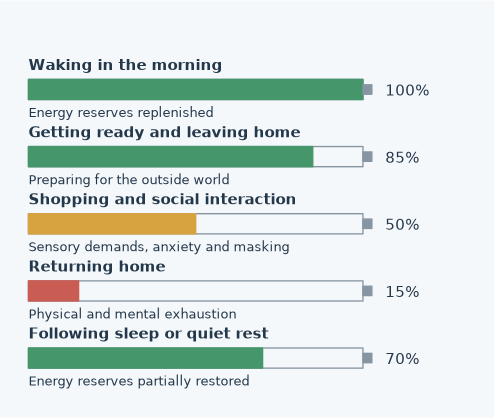
Upon returning home, an autistic person may need to go to bed and sleep for one or two hours before feeling sufficiently recovered to undertake further activities. For others, recovery may take considerably longer.
This does not necessarily mean that the autistic person has undertaken excessive physical activity. Much of their exhaustion may have resulted from the cognitive and emotional demands associated with functioning in an environment that does not accommodate their needs.
Furthermore, an autistic person with coexisting sleep apnoea or ME/CFS may begin the day with considerably reduced energy reserves, despite having spent several hours asleep.
Using the battery analogy, they may begin their day with a battery that has only partially recharged. Consequently, their capacity to undertake everyday activities may be significantly reduced from the outset.
Physical, Mental, Emotional and Sensory Fatigue
| Type of fatigue | Description |
|---|---|
| Physical fatigue | Bodily tiredness and a reduced capacity for physical activity. |
| Mental fatigue | Difficulty concentrating, processing information and making decisions. |
| Emotional fatigue | Reduced ability to manage emotions, stress and anxiety. |
| Social fatigue | Exhaustion resulting from sustained interaction with other people. |
| Sensory fatigue | Reduced ability to tolerate further sensory stimulation. |
An autistic person may experience several of these forms of fatigue simultaneously. It is important, however, to distinguish fatigue from excessive daytime sleepiness. Although both may occur together, they are not necessarily the same. There is insufficient scientific evidence to conclude that all autistic people biologically require more hours of sleep than non-autistic people.
8. Why Exhaustion May Only Become Apparent After Returning Home
Whilst outside the familiar surroundings of their home, an autistic person may be operating in a heightened state of alertness. Considerable mental effort may be directed towards managing their surroundings, remaining socially engaged and maintaining control over their behaviour.
Stress-related physiological responses may also temporarily sustain alertness, despite increasing fatigue.
Once the individual returns home, these demands may diminish. They may no longer feel the need to mask their autistic characteristics or remain constantly aware of their surroundings. At this point, the extent of their accumulated exhaustion may become more apparent.
This may result in:
- An overwhelming desire to sleep.
- Reduced willingness or ability to communicate.
- Increased irritability.
- Difficulty making relatively simple decisions.
- Heightened sensory sensitivity.
- A need for solitude.
- Reduced emotional regulation.
- An increased susceptibility to meltdowns or shutdowns.
This experience may also help explain why some autistic children appear to cope throughout the school day but become distressed, withdrawn or exhausted shortly after returning home. Home may represent an environment in which the individual feels sufficiently safe to stop masking and begin recovering from the demands of the day.
9. The Relationship Between Stress, Anxiety and Sleep
Stress, anxiety, sensory overload and sleep deprivation can interact in a continuous and potentially debilitating cycle.
When an individual experiences a stressful situation, the nervous system may initiate a physiological stress response involving hormones such as adrenaline and cortisol. These responses help prepare the body to respond to perceived challenges or threats.
However, repeated exposure to stressful situations, particularly without adequate opportunities for recovery, may make it more difficult for the individual to relax and obtain restorative sleep.
Insufficient sleep may subsequently reduce their ability to cope with further stress, anxiety and sensory stimulation.
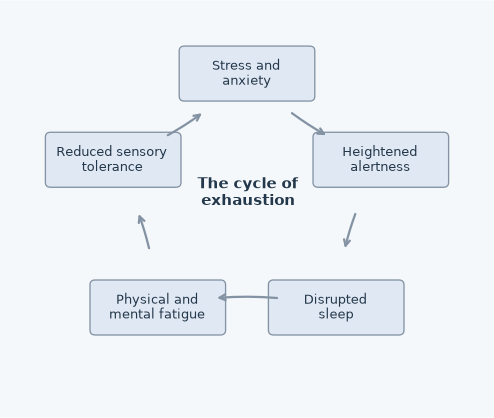
Breaking this cycle may require more than simply encouraging the individual to obtain additional sleep. It may also require reducing the daily demands that are contributing to their exhaustion.
10. The Difference Between Sleep and Rest
Although sleep and rest are closely related, they fulfil different functions. An autistic person may require periods of rest without necessarily needing to sleep.
Physical Rest
Allowing the body to recover through sitting comfortably, lying down, relaxing or sleeping.
Mental Rest
Reducing cognitive demands by taking a break from decision-making, problem-solving, work and responsibilities.
Sensory Rest
Withdrawing from uncomfortable sounds, bright lights, strong smells and other overwhelming sensory experiences.
Emotional Rest
Spending time in an environment where emotions and autistic characteristics do not need to be continually concealed or controlled.
Social Rest
Taking time away from social interaction and the expectations of other people.
Restorative Activities
Participating in enjoyable, familiar activities, particularly those associated with an individual’s interests, may also promote relaxation.
For example, an autistic person may find photography, gardening, reading, listening to music or researching a particular subject considerably more restorative than attending a social gathering.
However, where an individual has coexisting ME/CFS, even enjoyable activities may contribute to exhaustion if they exceed the person’s available energy. Rest should therefore be regarded as an individualised process rather than simply the absence of activity.
11. The Consequences of Insufficient Sleep and Rest
Prolonged sleep disruption and inadequate recovery can affect almost every aspect of an autistic person’s everyday life.
Cognitive Functioning
Insufficient sleep may affect concentration, memory, information processing, problem-solving, decision-making and planning. Tasks that would ordinarily be manageable may become increasingly difficult.
Emotional Regulation
An exhausted autistic person may have greater difficulty regulating their emotions and managing frustration. They may become increasingly irritable, anxious or withdrawn and experience more frequent meltdowns or shutdowns.
Sensory Tolerance
Sounds, lighting, smells and tactile experiences that would normally be tolerable may become increasingly uncomfortable when an individual is exhausted.
Relationships
Persistent fatigue can place considerable pressure upon relationships with partners, family members, friends and colleagues. An autistic person’s need for solitude or additional sleep may be wrongly interpreted as rejection, disinterest or a lack of consideration for other people.
Physical Health
Long-term inadequate sleep is associated with impaired immune function and an increased risk of various physical and mental health problems. Recognising and addressing persistent sleep difficulties should therefore be regarded as an important aspect of supporting an autistic person’s overall health.
12. The Relationship Between Sleep, Exhaustion and Autistic Burnout
When the demands placed upon an autistic person repeatedly exceed their capacity to cope, without sufficient opportunities for recovery, they may become increasingly susceptible to autistic burnout.
Autistic burnout is commonly described as a prolonged period of profound exhaustion, reduced functional abilities and diminished tolerance to sensory and social demands. Unlike ordinary tiredness, autistic burnout may persist for weeks, months or longer. The individual may experience difficulties undertaking activities that they were previously capable of managing independently.
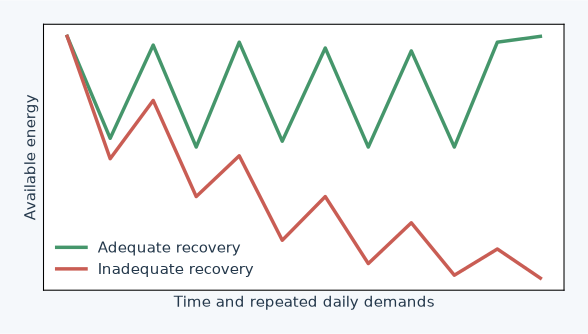
Research into autistic burnout has identified sensory demands, social pressures, masking and everyday challenges as contributing factors. Opportunities for rest, solitude and sensory relief have also been identified as important aspects of recovery.5
Preventing autistic burnout may therefore require significant adjustments to an individual’s lifestyle, responsibilities and surrounding environment, rather than simply increasing the number of hours they sleep.
Although autistic burnout and ME/CFS share some characteristics, including profound exhaustion and reduced functional abilities, they are not the same condition. An individual may experience both, and appropriate medical assessment is important.
13. Interventions and Strategies to Improve Sleep
There are numerous interventions that may help autistic people improve the quality and duration of their sleep. However, interventions should be tailored to the individual’s sensory preferences, personal circumstances and underlying reasons for experiencing sleep difficulties.1, 6
Establishing a Predictable Bedtime Routine
Predictable routines can help reduce uncertainty and anxiety whilst preparing the body and mind for sleep. Where possible, an autistic person should be encouraged to establish a familiar sequence of activities during the evening.11, 12
These might include having a warm bath, changing into comfortable nightwear, listening to relaxing music, reading a book and gradually reducing exposure to bright lighting. Maintaining relatively consistent sleeping and waking times may also help regulate the body’s internal biological clock.11, 13
Creating a Sensory-Friendly Bedroom
The bedroom should be regarded as a place of safety, comfort and relaxation. Relatively inexpensive adjustments to the sleeping environment may considerably improve an autistic person’s ability to relax.
| Sensory difficulty | Potential intervention |
|---|---|
| Excessive light | Blackout curtains or blinds. |
| Uncomfortable lighting | Soft, warm-coloured lighting. |
| External noise | Sound insulation or suitable earplugs. |
| Uncomfortable bedding | Alternative materials and textures. |
| Clothing irritation | Soft, loose-fitting nightwear. |
| Excessive warmth | Improved ventilation and lighter bedding. |
| Strong smells | Fragrance-free washing products. |
| Visual distractions | Reduced clutter and removal of unnecessary illuminated devices. |
| Need for comforting sensory input | Familiar blankets, pillows or soothing background sounds. |
It is important to remember that what one autistic person finds relaxing may be extremely uncomfortable for another.
Reducing Cognitive Stimulation Before Bedtime
An autistic person’s ability to become intensely focused on a particular subject or activity may make it difficult for them to recognise when it is time to sleep.
Although engaging in a particular interest can be beneficial to emotional wellbeing, it may also delay bedtime. Setting gentle reminders, establishing a natural stopping point and allowing sufficient time to disengage from an activity may help the individual prepare for sleep without causing unnecessary frustration.
Managing Stress and Anxiety
Managing anxiety during the day may be just as important as establishing an effective bedtime routine. Reducing unnecessary demands, providing advance notice of changes, allowing sensory breaks and avoiding excessive social commitments may help prevent the accumulation of stress.
Some autistic people may also benefit from writing down their thoughts and concerns before going to bed, reducing the perceived need to continually revisit them throughout the night.
Managing Broken Sleep
When an autistic person awakens during the night, they may find it beneficial to avoid repeatedly checking the time, reduce exposure to bright lights and avoid stimulating activities.13
If unable to return to sleep, undertaking a quiet, relaxing activity in a comfortable environment until they feel sleepy again may be helpful.
Persistent insomnia may benefit from Cognitive Behavioural Therapy for Insomnia (CBT-I), particularly when adapted to accommodate autistic communication styles, sensory needs and preferences.1, 13
Medication and Professional Support
In certain circumstances, healthcare professionals may consider prescribing melatonin to help regulate sleep patterns. However, melatonin is not a universal solution to sleep difficulties and may be inappropriate where disturbed sleep results from pain, anxiety, sleep apnoea or another underlying condition.1, 12
In the United Kingdom, melatonin is a prescription-only medication. Clinical guidance recommends investigating underlying causes and establishing appropriate sleeping routines before considering medication for autistic children and young people.12, 14
Where coexisting medical conditions such as sleep apnoea or ME/CFS are present, appropriate medical treatment and individualised support should form an integral part of the person’s overall sleep and recovery plan.
14. Managing Energy Throughout the Day
Rather than waiting until an autistic person becomes completely exhausted, it may be beneficial to introduce regular opportunities for recovery throughout the day. This approach is sometimes referred to as energy management or pacing.
The objective is to prevent an individual’s available energy from becoming so depleted that they are unable to function effectively.
Practical approaches may include scheduling fewer appointments on the same day, allowing recovery time after shopping, taking regular sensory breaks, reducing unnecessary social commitments and alternating demanding activities with restorative ones.
Recognising Available Energy
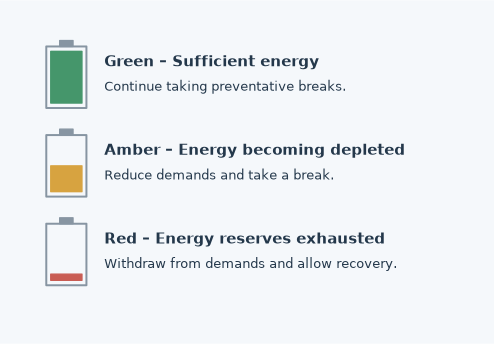
An autistic person should not feel compelled to continue undertaking activities until they reach the red stage. This approach is particularly important for individuals with coexisting ME/CFS, where exceeding their available energy limits may result in post-exertional malaise and prolonged periods of recovery.
Rest should be regarded as a preventative intervention rather than something that is only permitted once exhaustion has occurred.
15. Is Sleeping During the Day Beneficial?
For some autistic people, sleeping during the day may provide considerable relief from physical and mental exhaustion. Following a particularly demanding experience, a period of sleep may help them feel more capable of concentrating, communicating and managing their emotions.
However, there are both potential benefits and disadvantages.
| Potential benefits | Potential disadvantages |
|---|---|
| Reduced physical exhaustion. | Difficulty falling asleep at night. |
| Improved concentration. | Disruption of the body’s internal clock. |
| Improved emotional regulation. | Temporary grogginess after waking. |
| Relief from sensory demands. | An increasingly irregular sleeping pattern. |
| Improved ability to undertake further activities. | Potentially concealing an underlying medical condition. |
Short naps earlier in the day may be less disruptive to night-time sleep than prolonged naps during the late afternoon or evening. Nevertheless, some autistic people may find that a short nap is insufficient to recover from particularly demanding experiences.13
The objective should be to establish an appropriate balance between daytime recovery and restorative night-time sleep. An autistic person who regularly requires several hours of additional sleep, particularly if this need is increasing, should consider discussing their fatigue with a healthcare professional.
Where sleep apnoea or ME/CFS is present, additional sleep alone may not adequately address the underlying causes of exhaustion.
16. Incorporating Sleep and Rest into an Autistic Person’s Daily Support Plan
For autistic people who experience significant fatigue, sleep disturbances or sensory exhaustion, sleep and rest should be incorporated into their individual daily support plan. The plan should be developed in consultation with the autistic person and should recognise their individual needs and preferences.
| Support requirement | Information to include |
|---|---|
| Sleeping patterns | Normal bedtime, waking times and overnight awakenings. |
| Sensory sensitivities | Environmental factors that may disturb sleep. |
| Triggers for exhaustion | Activities and environments that require considerable energy. |
| Early warning signs | Changes in behaviour, concentration or sensory tolerance. |
| Preventative rest | Scheduled opportunities for recovery. |
| Recovery environment | Access to a quiet, comfortable and familiar space. |
| Communication | How the person communicates their need for rest. |
| Daytime sleep | Preferred duration and timing of naps, where appropriate. |
| Helpful activities | Interests and activities that promote relaxation. |
| Medical support | Relevant health conditions and professional recommendations. |
| Coexisting medical conditions | Additional adjustments required to accommodate conditions such as sleep apnoea and ME/CFS. |
| Energy limitations | Recognising individual limits and avoiding activities that could worsen symptoms. |
Example of a Daily Activity and Recovery Plan
| Time | Activity |
|---|---|
| 8.00 am | Wake, have breakfast and prepare for the day. |
| 9.00 am | Review the day’s activities. |
| 10.00 am | Shopping, appointments or other activities outside the home. |
| 11.30 am | Return home and have a period of recovery. |
| 12.30 pm | Lunch. |
| 1.00 pm | Quiet rest or sleep if required. |
| 2.30 pm | Participate in an enjoyable interest. |
| 4.00 pm | Review energy levels and take a sensory break. |
| 5.30 pm | Evening meal. |
| 7.00 pm | Relaxing activities. |
| 9.00 pm | Begin bedtime routine. |
| 10.00 pm | Bedtime, when sleepy. |
This timetable is illustrative and should remain flexible according to the individual’s energy levels, sleeping patterns, medical conditions and daily responsibilities.
Maintaining a Sleep Diary
Maintaining a sleep diary for two weeks or longer may help identify factors contributing to exhaustion and disturbed sleep.11, 12
Information recorded could include:
- Activities undertaken throughout the day.
- Stress and anxiety levels.
- Experiences of sensory overload.
- Time spent masking autistic characteristics.
- Bedtime and the time taken to fall asleep.
- Frequency and duration of overnight awakenings.
- Daytime naps and periods of rest.
- How refreshed the individual feels upon waking.
- Symptoms associated with coexisting medical conditions.
- Delayed exhaustion following physical, mental or social activities.
This information may also help healthcare professionals identify potential underlying causes and establish whether particular activities are contributing to increased exhaustion or disrupted sleep.
17. Supporting Autistic Children and Adults
Supporting Autistic Children
Autistic children may expend considerable energy attempting to cope with the social, educational and sensory demands of a school environment. By the time they return home, their ability to participate in further activities may be significantly reduced.
Parents and carers should recognise that immediately expecting a child to complete homework, attend extracurricular activities or participate in family discussions may increase their distress.
Providing a period of quiet recovery after school may help the child replenish their energy reserves before undertaking further activities. Schools should also consider providing sensory breaks, quiet spaces, predictable routines and reasonable adjustments throughout the school day.
Persistent sleeping difficulties in children should be discussed with an appropriate healthcare professional.12
Supporting Autistic Adults
Autistic adults may experience similar challenges in employment, further education, relationships and everyday community activities.
Employers and educational establishments should consider reasonable adjustments such as flexible working arrangements, quieter environments, opportunities for regular breaks and reduced exposure to unnecessary sensory demands.
Family members and partners should also recognise the importance of allowing autistic adults sufficient opportunities to recover following demanding experiences. The need to rest should not be interpreted as an unwillingness to contribute towards family responsibilities.
Where an autistic person also experiences a chronic medical condition, family members, carers and employers should recognise that their capacity to undertake everyday activities may fluctuate considerably. An activity that the individual was able to undertake yesterday may be beyond their capabilities today.
Understanding, communication and flexibility can considerably reduce the potential for misunderstandings and conflict.
18. When Should Medical Advice Be Sought?
Although autism-related sensory and social demands may contribute to fatigue, it is important that other potential causes are not overlooked.
Medical advice should be sought where an individual experiences:
- Persistent or worsening physical and mental exhaustion.
- Excessive daytime sleepiness despite adequate night-time sleep.
- Regularly falling asleep unintentionally.
- Loud snoring, gasping or interruptions to breathing during sleep.
- Persistent headaches upon waking.
- Frequent or prolonged episodes of insomnia.
- Unusual movements during sleep.
- A significant change in their normal sleeping patterns.
- Difficulties undertaking everyday activities because of exhaustion.
- A significant worsening of symptoms following relatively minor activities.
- Prolonged periods of exhaustion that are not alleviated by sleep or rest.
Conditions such as anaemia, thyroid disorders, diabetes, obstructive sleep apnoea, ME/CFS, medication side effects and other medical conditions may contribute to fatigue and disturbed sleep.15
Healthcare professionals should consider the autistic person’s overall physical and mental health, sensory sensitivities, lifestyle and coexisting medical conditions when investigating persistent exhaustion.
An autism diagnosis should never result in other potentially treatable health conditions being overlooked. Individuals experiencing excessive daytime sleepiness should avoid driving or operating machinery until it is safe to do so.7, 15
19. The Author’s Lived Experiences of Sleep, Rest and Exhaustion
Living in a Predominantly Neurotypical World
For the author, participating in everyday activities within a predominantly neurotypical (NT) world can result in considerable physical, mental, emotional and sensory exhaustion.
Activities that many non-autistic individuals may consider routine, such as visiting a supermarket, dining in a restaurant or socialising with friends, can require substantial amounts of energy.
The author frequently finds that, upon returning home from such activities, there is an overwhelming need to retire to bed for a couple of hours to rest and replenish their depleted energy reserves.
Restaurants and Background Noise
One of the principal difficulties experienced by the author when visiting restaurants is the inability to effectively filter out background noise.
Conversations taking place at neighbouring tables, background music, the movement of chairs, the sound of cutlery and the general activities of restaurant staff all compete for the author’s attention.
Rather than being able to disregard these sounds and concentrate upon a single conversation, the author finds it extremely difficult to distinguish what is being said by individuals sitting immediately beside them.
The considerable mental effort required to follow a conversation whilst simultaneously processing numerous other sounds can be extremely exhausting.
Consequently, an occasion intended to be enjoyable and relaxing may become a particularly demanding sensory and social experience.
Supermarkets and Sensory Overload
Visiting a supermarket presents the author with a combination of sensory, cognitive and social challenges.
Bright artificial lighting, background announcements, conversations, shopping trolleys and unfamiliar or unpleasant smells all contribute to the author’s sensory discomfort.
An additional source of stress arises when attempting to navigate crowded supermarket aisles.
The author frequently experiences difficulty anticipating the direction in which an approaching individual intends to move. Consequently, deciding whether to move to the left or right to avoid a collision can become unnecessarily stressful.
On occasions, other individuals continue walking directly towards the author, apparently expecting the author to move out of their way.
The author sometimes perceives such behaviour as rude, inconsiderate and lacking in awareness of the needs of others, although the intentions of those individuals may be different.
Whilst each of these experiences may appear relatively insignificant in isolation, their cumulative effect can result in considerable stress, anxiety and exhaustion.
Socialising and the Hidden Cost of Masking
Although the author enjoys meeting friends and participating in social activities, these occasions can also place considerable demands upon their available energy.
Maintaining conversations, interpreting social expectations, monitoring personal behaviour and attempting to conceal sensory discomfort all require sustained mental and emotional effort.
Throughout these experiences, the author continually masks autistic characteristics in an attempt to conform to the expectations of the surrounding neurotypical environment.
Other individuals may remain completely unaware of the considerable effort required to maintain this outward appearance of confidence, sociability and emotional control.
Returning Home and Recharging the Batteries
Upon returning home, the author is once again within a familiar, predictable and controlled environment.
The need to interpret the behaviour of others, process uncomfortable sensory information and maintain an outward appearance of coping is significantly reduced.
It is frequently at this point that the full extent of the accumulated exhaustion becomes apparent.
The author often describes the subsequent need for sleep and rest as “recharging the batteries”.
Even relatively short visits outside the home can result in the need for several hours of recovery. This is not necessarily related to the amount of physical activity undertaken, but rather to the combined mental, emotional, social and sensory demands experienced throughout the outing.
The Compounding Effects of Coexisting Medical Conditions
The author’s experiences of exhaustion are further compounded by several coexisting medical conditions, including diabetes, ME/CFS and sleep apnoea, together with the side effects of prescribed medication.
These additional factors may reduce the author’s available energy reserves and increase the time required to recover following everyday activities.
Consequently, the author may begin an outing with energy reserves that are already partially depleted.
The Importance of Understanding and Acceptance
The author’s lived experiences demonstrate that activities perceived by many non-autistic people as enjoyable, straightforward or relatively undemanding can have a considerably different impact upon an autistic individual.
The need for additional sleep and rest should not be interpreted as laziness, a lack of motivation or an unwillingness to participate in everyday life.
Instead, it should be recognised as an important part of managing the cumulative demands associated with living in environments that do not always accommodate autistic needs.
For the author, the greatest cause of exhaustion is often not the physical activity itself, but the considerable effort required to function within a predominantly neurotypical world.
20. Conclusion
Sleep and rest play a fundamental role in maintaining the physical, psychological and emotional wellbeing of autistic people.
Disrupted sleeping patterns may arise from differences in circadian rhythms, sensory hypersensitivity, stress, anxiety and associated health conditions.
For many autistic people, functioning within a predominantly neurotypical world can also place considerable additional demands upon their physical, mental and emotional energy reserves.
The continuous need to mask autistic characteristics, manage sensory experiences, interpret social interactions and adapt to unfamiliar circumstances may result in profound exhaustion. Consequently, autistic people may require additional opportunities for sleep, solitude and sensory recovery.
The presence of coexisting medical conditions, such as obstructive sleep apnoea and ME/CFS, can further compound these difficulties, reducing an individual’s ability to replenish their energy reserves and increasing the time required to recover from everyday activities.
Understanding the concept of recharging their batteries may help non-autistic people appreciate why an individual who has undertaken relatively little physical activity can nevertheless become completely exhausted.
Providing predictable routines, sensory-friendly environments, appropriate medical interventions, reasonable adjustments and sufficient opportunities for recovery may improve wellbeing and reduce vulnerability to sensory overload, meltdowns, shutdowns and autistic burnout.
Rather than expecting autistic people to continually adapt to the neurotypical world, greater consideration should be given to adapting that world to accommodate their needs.
An autistic person’s need to rest is not a sign of laziness, weakness or a lack of motivation. It may be an essential part of maintaining their ability to function within a world that continually places additional demands upon them.
21. Scientific Articles and References
1. 2024 review
Management of Sleep Problems in People with Autism: An Updated Review (2024).
Rare Diseases and Orphan Drugs Journal, Volume 3. Reviews sleeping difficulties in autistic people across different stages of life and the evidence supporting interventions.
2. Veneruso et al. (2026)
Sleep in Autism Spectrum Disorder: A Systematic Update.
A review of sleep disturbances in autistic people.
3. Hohn, V. D. et al. (2019)
Journal of Autism and Developmental Disorders, Volume 49.
Examines the relationship between sensory hypersensitivity and insomnia in autistic adults.
4. Lane, S. J., Leão, M. A. and Spielmann, V. (2022)
Sleep, Sensory Integration/Processing, and Autism: A Scoping Review.
Frontiers in Psychology, Volume 13.
Examines the relationship between sensory processing differences and sleeping difficulties.
5. Ali, D. et al. (2025)
Burnout as Experienced by Autistic People: A Systematic Review.
Clinical Psychology Review.
Examines the causes and consequences of autistic burnout and the importance of rest, sensory relief and appropriate support.
6. Keogh, S. et al. (2019)
PLOS ONE, 14(8), e0221428.
Examines evidence for interventions without medication to improve sleep duration, sleep onset and sleep efficiency in autistic children. The review included three randomised controlled trials.
22. Further Reading and Guidance
7. NHS
Symptoms, diagnosis and treatment of sleep apnoea.
8. NICE NG202
Obstructive sleep apnoea/hypopnoea syndrome and obesity hypoventilation syndrome in over 16s
Guidance on assessment, treatment and support for sleep-related breathing disorders.
9. NHS
Information on symptoms, diagnosis and management.
10. NICE NG206
ME/CFS: Diagnosis and management
Guidance on post-exertional malaise, energy management and individualised care.
11. National Autistic Society (NAS)
Sleep – A guide for autistic adults
Practical guidance on sleep difficulties and possible adjustments.
12. NICE CG170
Autism spectrum disorder in under 19s: Support and management
Includes assessment and management of sleep difficulties in autistic children and young people.
13. NHS
Information on insomnia, sleep habits and when to seek medical advice.
14. SIGN 145 (2016)
Assessment, Diagnosis and Interventions for Autism Spectrum Disorders (PDF)
Older Scottish guidance including sleep difficulties. Consult current clinical guidance for treatment decisions. Alternative copy hosted by GAMP.
15. NHS
Common causes of persistent fatigue and when to seek medical advice.
Disclaimer
This article has been produced to increase awareness and understanding of the experiences of autistic people. It draws upon scientific research, general information and reported autistic lived experiences.
The diagrams are original explanatory illustrations and do not represent clinically validated measurements.
Autistic people are individuals, and their experiences, sleeping patterns, coexisting medical conditions and support requirements may differ considerably.
The information provided should not be regarded as a substitute for professional medical advice, diagnosis or treatment.