The Emotional and Psychological Impact of Autism on Families and Relationships
Introduction
Autism is a lifelong neurodevelopmental difference that influences how individuals experience, process and respond to the world around them. Although discussions surrounding autism understandably concentrate on autistic individuals themselves, it is equally important to recognise the experiences of their families, partners, carers and close friends.
The impact upon those closest to an autistic person can be considerable, particularly where substantial support is required or where difficulties associated with sensory processing, communication, emotional regulation, anxiety or everyday living are present. These circumstances may influence family relationships, emotional wellbeing, employment, financial security and opportunities for social participation.
However, autism should not automatically be regarded as a burden upon families. Many autistic individuals enjoy fulfilling relationships, contribute positively to family life and provide affection, companionship, loyalty and distinctive perspectives. Difficulties frequently arise not simply because someone is autistic, but because their needs are misunderstood, appropriate services are unavailable or families are expected to manage without sufficient assistance.
Autistic individuals differ considerably in their personalities, abilities, communication preferences and support requirements. Consequently, the experiences of their families and carers cannot be described as though they were identical.
This article examines the emotional and psychological pressures that may affect families, partners, carers and friends, including loneliness, anxiety, prolonged stress, emotional exhaustion and relationship difficulties. It also considers the possible consequences for physical health and the importance of ensuring that those providing support receive appropriate assistance themselves.
1. Emotional Stress and Carer Burnout
Providing ongoing support to an autistic family member or partner can involve considerable emotional demands. These may include anticipating situations that could cause distress, managing unexpected changes, arranging appointments, advocating for appropriate services and helping the individual navigate environments that are difficult or overwhelming.
For some families, these responsibilities become part of everyday life. Parents may need to consider how their child will cope with school, social activities or unfamiliar environments. Partners may adjust household routines to accommodate sensory sensitivities or communication differences. Carers supporting autistic adults with substantial needs may be responsible for personal care, safety, medication arrangements or assistance with independent living.
Although these responsibilities may be undertaken willingly and with considerable affection, their cumulative demands can gradually affect the carer's physical and psychological wellbeing.
Carer burnout describes a state of emotional, mental and physical exhaustion that may develop when caring responsibilities remain demanding over an extended period without adequate opportunities for rest, recovery or support.
Common experiences include persistent tiredness, irritability, reduced concentration, disturbed sleep, emotional withdrawal and feelings of being overwhelmed. Some carers may begin to experience resentment towards their circumstances, followed by guilt for having such feelings.
Importantly, experiencing exhaustion or frustration does not mean that someone cares less about their autistic relative or partner. It may indicate that the demands placed upon them have exceeded the resources and support currently available.
Living in a Constant State of Alertness
The risk of burnout may become particularly pronounced when carers feel that they must remain constantly alert to potential difficulties. This state of heightened vigilance can make it difficult to relax, even when no immediate problem is present.
For example, a parent whose autistic child regularly experiences severe distress after school may spend much of the afternoon anticipating what might happen when the child returns home. Similarly, the partner of an autistic adult experiencing periods of emotional overload may become increasingly cautious about changes to plans, unexpected visitors or other circumstances that could contribute to distress.
Although planning and preparation can help prevent unnecessary difficulties, continually anticipating what might happen next can become psychologically exhausting.
The individual may find that their thoughts remain occupied by potential problems rather than allowing them to enjoy periods of relative calm. Even when the autistic person is settled and comfortable, the carer may struggle to switch off mentally.
This continuing vigilance may result in disturbed sleep, muscular tension, headaches, reduced concentration and an increasing inability to cope with unexpected demands.
Over time, the individual may feel that they are functioning in a permanent state of emergency, with little opportunity for genuine relaxation.
When Emotional Exhaustion Becomes Overwhelming
Unlike ordinary tiredness, emotional exhaustion may not disappear after a single night's sleep or a brief period of rest.
A parent who has spent months attending meetings, challenging decisions and attempting to obtain appropriate educational support may begin to feel emotionally depleted. Similarly, a partner who regularly provides reassurance during periods of anxiety or distress may eventually find that their own emotional resources have become exhausted.
The individual may become less patient, withdraw from conversations or lose interest in activities they previously enjoyed.
Such changes can sometimes be misunderstood as indifference or a lack of commitment. However, they may instead indicate that the person has reached the limits of what they can reasonably manage without additional assistance.
It is also important to acknowledge that many parents, partners and carers are themselves autistic or otherwise neurodivergent. They may be managing their own sensory sensitivities, communication needs and emotional exhaustion alongside their caring responsibilities.
For these individuals, inaccessible services, unpredictable demands and the expectation that they must continually adapt to others may intensify the risk of burnout.
A person can love and care deeply for someone while simultaneously recognising that they are no longer able to manage every responsibility without support.
2. Anxiety, Depression and Emotional Wellbeing
Families, partners and carers may experience increased anxiety when they are uncertain about the wellbeing, safety or future circumstances of an autistic person they support.
Concerns can arise from difficulties accessing healthcare, securing suitable educational provision, obtaining social care assistance or ensuring that an individual's needs are understood by professionals.
Parents may worry about their child's ability to form friendships, participate in education or develop independence. Partners may be concerned about maintaining a healthy relationship while balancing differing communication and emotional needs. Carers supporting autistic adults with significant support requirements may experience uncertainty about future accommodation, financial security and continuity of care.
Such concerns can become particularly distressing when families encounter lengthy waiting lists, inconsistent professional advice or repeated difficulties obtaining appropriate assistance.
Anxiety and Uncertainty About the Future
Anxiety frequently involves anticipating events that have not yet occurred. For some carers, uncertainty about the future becomes a persistent source of psychological distress.
A parent may worry about whether their autistic child will receive appropriate support in adulthood. Someone caring for an autistic adult with substantial support needs may be concerned about what will happen when they become older or are no longer physically able to provide assistance.
These concerns can become particularly difficult when there are no clear arrangements for future care or when available services appear inadequate.
Some individuals repeatedly imagine difficult situations and mentally rehearse how they might respond. Although preparation can be useful, excessive anticipation can interfere with sleep, concentration and everyday enjoyment.
Anxiety may also influence family relationships. A person who is continually worried may become more cautious about unfamiliar activities, changes to routines or allowing others to provide support.
Such responses may arise from a desire to prevent distress rather than an intention to restrict another person's independence. Nevertheless, it is important to balance reasonable preparation with the autistic individual's autonomy and right to make decisions.
Depression and Reduced Emotional Wellbeing
Prolonged stress, isolation and uncertainty may contribute to symptoms of depression in some individuals.
These may include persistent low mood, reduced motivation, loss of interest in previously enjoyable activities, feelings of hopelessness and difficulties concentrating.
A parent who has repeatedly sought assistance without success may gradually lose confidence that circumstances will improve. A partner who feels that their own emotional needs are continually overlooked may begin to experience sadness, frustration or emotional withdrawal.
Such difficulties should not automatically be regarded as an inevitable consequence of supporting an autistic person.
The risk of psychological distress is influenced by numerous factors, including the availability of practical assistance, financial circumstances, the quality of personal relationships and the individual's existing mental health.
Recognising these influences is important because it directs attention towards circumstances that may be improved rather than treating distress as something families must simply accept.
3. Guilt, Responsibility and Conflicting Emotions
One of the more complicated emotional experiences reported by some families and carers is the coexistence of affection, commitment, frustration, exhaustion and guilt.
A parent may deeply love their autistic child while occasionally wishing for relief from the demands of caring. A partner may value their relationship while finding certain communication difficulties or periods of emotional distress challenging. A carer may feel proud of the support they provide while simultaneously experiencing sadness about opportunities they have had to postpone or abandon.
These feelings are not necessarily contradictory. Human relationships are complex, and it is possible to experience several emotions at the same time.
Nevertheless, families may judge themselves harshly for experiencing frustration or resentment.
Some parents question whether they could have recognised their child's needs earlier or whether different decisions might have prevented particular difficulties. Partners may wonder whether they have misunderstood an autistic person's intentions or responded appropriately during periods of distress.
Such self-questioning can be constructive when it encourages understanding and improved communication. However, persistent self-blame may damage confidence and emotional wellbeing.
The Pressure to Be Constantly Strong
Some carers feel that they must remain emotionally strong because other people depend upon them.
They may avoid discussing their own difficulties for fear of upsetting the autistic individual, appearing disloyal or being perceived as unable to cope.
This can result in emotional suppression, whereby distressing feelings are repeatedly concealed rather than acknowledged or discussed.
A person may continue presenting an appearance of confidence and control while privately experiencing considerable anxiety or sadness.
Over time, the difference between how the individual appears to others and how they actually feel may become increasingly difficult to maintain.
It is important to distinguish between accepting responsibility for one's own actions and assuming responsibility for circumstances that are beyond one's control.
Families cannot eliminate every sensory difficulty, prevent every episode of emotional overload or compensate entirely for inadequate public services. Nor should they be expected to do so.
Supportive relationships are more likely to develop when individuals can discuss difficulties openly, acknowledge their own limitations and seek assistance without feeling that doing so represents failure.
4. Loneliness, Social Isolation and Inadequate Support
Feeling Alone Despite Being Surrounded by Others
One of the most difficult experiences reported by some partners, parents and carers of autistic individuals is a profound sense of loneliness.
This loneliness does not necessarily arise from being physically alone. Rather, it may develop from feeling that nobody truly understands the responsibilities, emotional pressures or difficulties they experience in their everyday lives.
An individual may be surrounded by family members, friends and colleagues yet still feel psychologically isolated. They may have people to talk to but believe that nobody fully appreciates the circumstances they are describing.
For example, a partner supporting an autistic adult who experiences significant sensory overload or anxiety may find themselves continually adapting household routines and providing reassurance. Although these adjustments may be made willingly, the partner may feel that their own emotional needs receive comparatively little attention.
Similarly, parents supporting an autistic child with substantial support needs may feel isolated from other parents whose family circumstances appear less demanding.
Conversations about ordinary family activities, holidays or social events can sometimes reinforce feelings of exclusion when similar opportunities are difficult to arrange.
The situation may become particularly distressing when friends or relatives minimise the difficulties being experienced.
Comments suggesting that someone is worrying unnecessarily, being overprotective or simply needs to be firmer can leave the individual feeling misunderstood and reluctant to seek further support.
Consequently, loneliness can develop not only through the absence of social contact but also through the absence of meaningful emotional understanding.
When There Is Nobody to Turn To
Having someone who listens without judgement can provide considerable psychological reassurance. When this support is absent, everyday concerns may become increasingly difficult to manage.
Some carers may feel that nobody is interested in their experiences unless there is an immediate problem involving the autistic individual.
They may attend appointments or meetings where considerable attention is given to the needs of the person receiving support, but little consideration is given to the emotional wellbeing of the family member providing that assistance.
Over time, this imbalance can create a sense that their own difficulties are unimportant.
A particularly damaging consequence can be the development of a belief that there is little realistic possibility of improvement.
Repeated unsuccessful attempts to obtain assistance may gradually reduce confidence in services and create feelings of helplessness.
For example, a parent who has repeatedly requested educational or social care support without receiving an adequate response may begin to feel that further attempts will achieve nothing.
Similarly, a partner seeking professional advice about communication difficulties or relationship tensions may become discouraged when appropriate services are unavailable.
The absence of support can itself become a major source of psychological distress, separate from the practical demands of caring.
The Loss of Personal Identity and Independence
For some individuals, caring responsibilities gradually become so central to everyday life that other aspects of their identity receive less attention.
A parent may begin to view themselves primarily as an advocate or carer rather than as an individual with their own interests, friendships and ambitions.
A partner may repeatedly postpone personal activities because of the need to provide support or maintain household stability.
Over time, this can create a sense of personal loss.
The individual may remember hobbies, social activities, employment opportunities or relationships that were once important but have gradually disappeared from their life.
Such experiences can produce sadness, frustration and a feeling that their own future has become increasingly restricted.
These feelings do not necessarily indicate regret about the relationship or the autistic individual. Rather, they may reflect the psychological consequences of having insufficient opportunities to maintain a balanced and fulfilling personal life.
Maintaining an identity beyond caring responsibilities is therefore an important aspect of emotional wellbeing.
Access to appropriate respite, practical assistance, social opportunities and supportive relationships can help individuals preserve their independence while continuing to provide meaningful support.
Understanding Personal Needs Through Maslow's Hierarchy
Abraham Maslow's Hierarchy of Needs offers a useful way of understanding how prolonged caring responsibilities may affect different aspects of a person's wellbeing.
The model identifies physiological needs, safety, love and belonging, esteem, and self-actualisation. Although traditionally presented as a pyramid, these needs are interconnected and do not necessarily have to be satisfied in a fixed order.
For families and carers, physiological needs may be affected by inadequate sleep, irregular meals and insufficient rest. Safety needs may be threatened by financial uncertainty, insecure accommodation or concerns about the continuity of support services.
Love and belonging can be affected when social relationships diminish, while esteem may suffer if caring responsibilities are overlooked or the individual feels that their contribution is unrecognised.
At the highest level, self-actualisation concerns personal growth and the opportunity to develop one's interests, abilities and ambitions. These opportunities may become increasingly restricted when caring responsibilities dominate everyday life.
Maslow's theory should be regarded as an illustrative framework rather than a rigid scientific explanation of human motivation. Nevertheless, it highlights why supporting carers requires more than simply ensuring that they can continue fulfilling practical responsibilities.
Their personal health, relationships, independence and aspirations also deserve recognition.
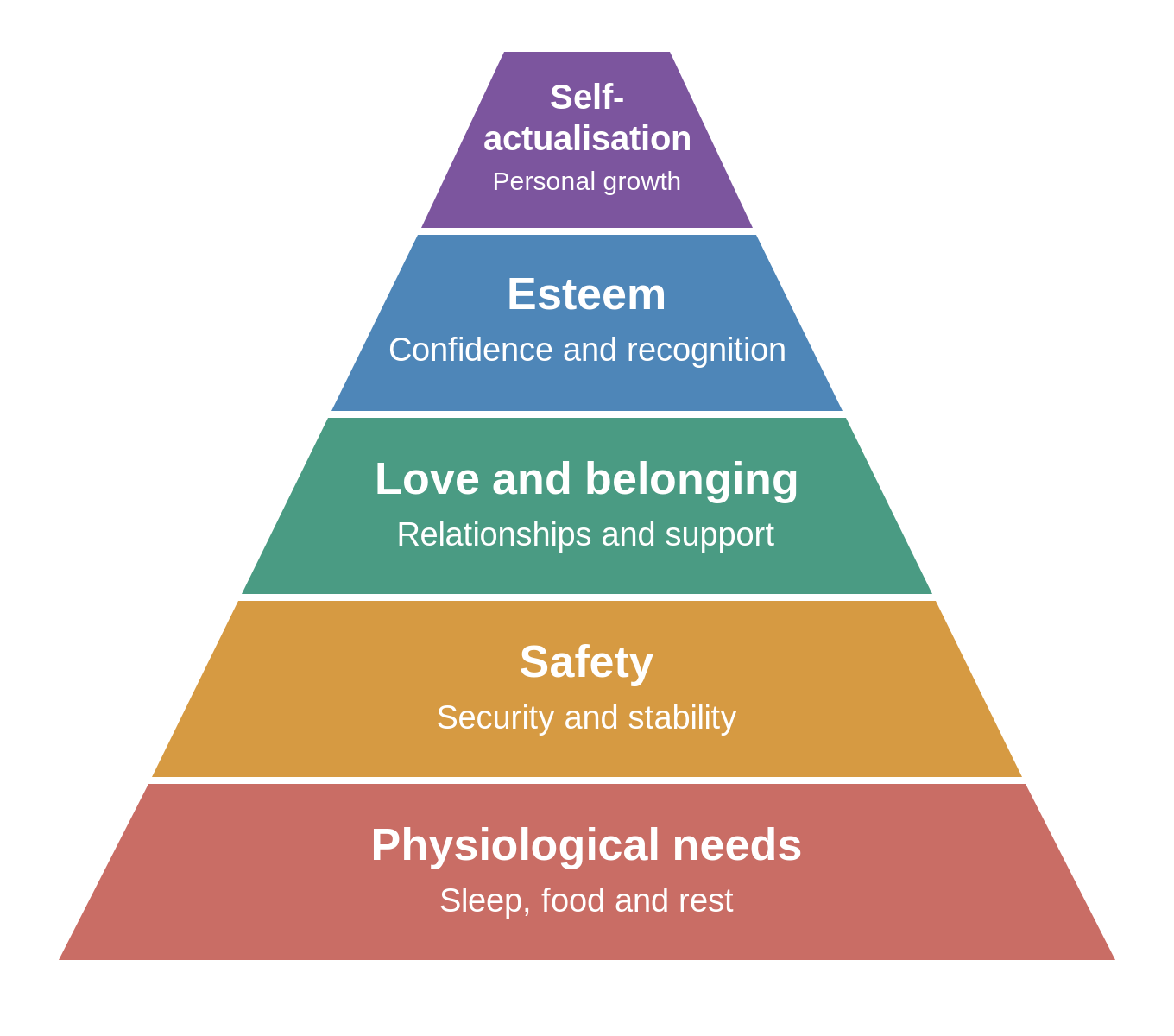
Figure 1. Maslow's Hierarchy of Needs.
5. The Physical and Mental Health Consequences of Prolonged Stress
The psychological pressures experienced by families, partners, carers and close friends can sometimes extend beyond emotional exhaustion and have significant consequences for their physical and mental health.
When an individual experiences persistent anxiety, inadequate sleep, social isolation and prolonged stress, the effects may gradually influence several aspects of their wellbeing.
The human body is capable of responding effectively to short periods of stress. However, when stressful circumstances continue over months or years without adequate opportunities for recovery, the body's stress-response systems may remain repeatedly activated.
This can contribute to disturbed sleep, increased muscular tension, changes in appetite, difficulties concentrating and alterations in cardiovascular and immune functioning.
For example, a partner who continually worries about the wellbeing of an autistic spouse may experience persistent anxiety and disrupted sleep. Similarly, a parent who feels unsupported while managing substantial caring responsibilities may develop chronic fatigue, headaches or other stress-related symptoms.
It is important to emphasise that these conditions are not caused by autism itself.
Rather, prolonged caring demands, inadequate support, financial pressures, disrupted sleep and social isolation may contribute to the development or worsening of certain health conditions.
Many families experience none of these difficulties, and the presence of an autistic person within a household does not automatically increase the risk of illness.
Potential Mental and Psychological Health Conditions
Anxiety disorders: Persistent and excessive worry that may interfere with sleep, concentration, decision-making and everyday activities.
Depression: Prolonged low mood, reduced motivation, loss of interest in previously enjoyable activities and feelings of hopelessness.
Adjustment disorders: Significant emotional or behavioural difficulties arising in response to identifiable stressful circumstances.
Insomnia and other sleep disturbances: Difficulty falling asleep, remaining asleep or obtaining restorative sleep, potentially resulting in daytime exhaustion.
Stress-related exhaustion and carer burnout: Severe emotional and physical depletion associated with sustained demands and insufficient recovery. Burnout is not necessarily a separate clinical diagnosis.
Panic attacks: Episodes of intense fear or distress that may involve palpitations, dizziness, trembling and shortness of breath.
Increased vulnerability to harmful coping behaviours: Some individuals may turn to excessive alcohol consumption, smoking or other potentially damaging behaviours in an attempt to manage psychological distress.
Potential Physical Health Conditions
High blood pressure (hypertension): Prolonged stress and associated lifestyle or sleep difficulties may contribute to elevated blood pressure in susceptible individuals.
Cardiovascular disease: Chronic psychological stress is associated with increased cardiovascular risk, although heart disease has multiple contributing factors.
Chronic headaches and migraines: Stress, muscular tension and disrupted sleep may trigger or worsen headaches and migraines in susceptible individuals.
Gastrointestinal difficulties: Stress can aggravate symptoms such as abdominal discomfort, indigestion and irritable bowel syndrome (IBS).
Musculoskeletal pain: Persistent tension may contribute to neck, shoulder and back pain, while stress can worsen existing chronic pain conditions.
Persistent fatigue: Inadequate sleep and prolonged psychological demands may produce continuing tiredness and reduced physical stamina. Persistent fatigue should be medically assessed rather than automatically attributed to stress.
Metabolic health difficulties: Chronic stress, poor sleep and changes in eating habits may contribute to weight changes and poorer blood glucose regulation, particularly in individuals with existing metabolic conditions.
Reduced resistance to some infections: Prolonged stress may influence immune functioning, although its effects vary considerably between individuals.
Exacerbation of existing illnesses: Conditions such as asthma, eczema, chronic pain and certain gastrointestinal disorders may become more difficult to manage during prolonged periods of stress.
When Caring Responsibilities Affect Personal Health
The development of these conditions depends upon numerous factors, including an individual's existing health, age, genetic predisposition, lifestyle, personal circumstances and access to appropriate support.
It would therefore be incorrect to assume that caring responsibilities inevitably result in physical or psychological illness.
Nevertheless, the potential consequences should not be underestimated.
An individual experiencing prolonged emotional pressure may gradually neglect their own health because their attention remains concentrated upon the needs of others.
Medical appointments may be postponed, opportunities for exercise or relaxation reduced, and symptoms dismissed as an unavoidable consequence of everyday responsibilities.
In some circumstances, carers may only recognise the extent of their own exhaustion when they become physically unwell or find themselves unable to continue managing their usual activities.
This highlights the importance of recognising carers as individuals with their own health needs, rather than viewing them solely through the assistance they provide to someone else.
The wellbeing of families, partners, carers and friends should be regarded as an essential component of effective autism support, not as a secondary consideration.
6. Relationship Breakdown and the Psychological Impact on the Remaining Carer
When Caring Responsibilities Place Relationships Under Pressure
The breakdown of a marriage or long-term relationship can be one of the most emotionally and practically challenging experiences faced by families supporting an autistic child or adult with substantial support needs.
Although many couples maintain strong, supportive and fulfilling relationships, others experience increasing difficulties when caring responsibilities become unequally distributed or when adequate external support is unavailable.
In some families, one partner gradually assumes the greater responsibility for attending medical appointments, communicating with schools, managing emotional distress, arranging professional support and organising everyday routines.
The other partner may become less involved, sometimes because of employment commitments, differing expectations, difficulties understanding the autistic person's needs or an inability to cope with the demands of family life.
When this imbalance continues, resentment, emotional exhaustion and feelings of isolation may develop.
For example, a mother may find herself responsible for almost every aspect of her autistic child's care while also managing household responsibilities, employment and the needs of other family members.
If her partner provides little practical or emotional assistance, she may begin to feel that she is effectively raising the child alone, despite remaining in a relationship.
Over time, this unequal distribution of responsibilities can undermine communication, intimacy, trust and mutual understanding.
However, it is important to recognise that autism itself does not inevitably cause relationship breakdown.
Difficulties are more appropriately understood in the context of inadequate support, relationship dynamics, financial pressures, differing coping strategies and the demands associated with providing care.
Understanding Relationship Difficulties Through Karpman's Drama Triangle
Stephen Karpman's Drama Triangle is a psychological model that describes three unhelpful roles which may develop during periods of interpersonal conflict.
These are commonly referred to as the Rescuer, Victim and Persecutor roles. They describe patterns of interaction rather than permanent characteristics of individuals.
A person occupying the Rescuer role may feel compelled to solve every problem, sometimes assuming responsibilities that should be shared or addressed through professional support.
The Victim role describes a pattern in which someone experiences themselves as powerless or unable to influence their circumstances. Within this model, the term does not mean that genuine victims of abuse, discrimination or neglect are responsible for what has happened to them.
The Persecutor role involves responding to difficulties through blame, criticism or controlling behaviour.
Individuals may move between these roles as circumstances change.
For example, a parent may initially assume nearly every caring responsibility because they believe nobody else can provide appropriate assistance. Over time, exhaustion may lead to feelings of helplessness and resentment. Eventually, frustration may be expressed through criticism of a partner who is perceived as contributing too little.
The model illustrates how unhelpful patterns of interaction can develop when responsibilities, expectations and emotional needs are not openly discussed.
However, it must be applied cautiously. Providing necessary assistance to an autistic individual should not automatically be characterised as rescuing, nor should legitimate distress, disability-related support needs or experiences of abuse be interpreted as participation in a psychological drama.
Karpman's Drama Triangle is best understood as a framework for reflecting upon certain interpersonal dynamics, rather than a diagnostic tool or an established explanation for relationship breakdown.
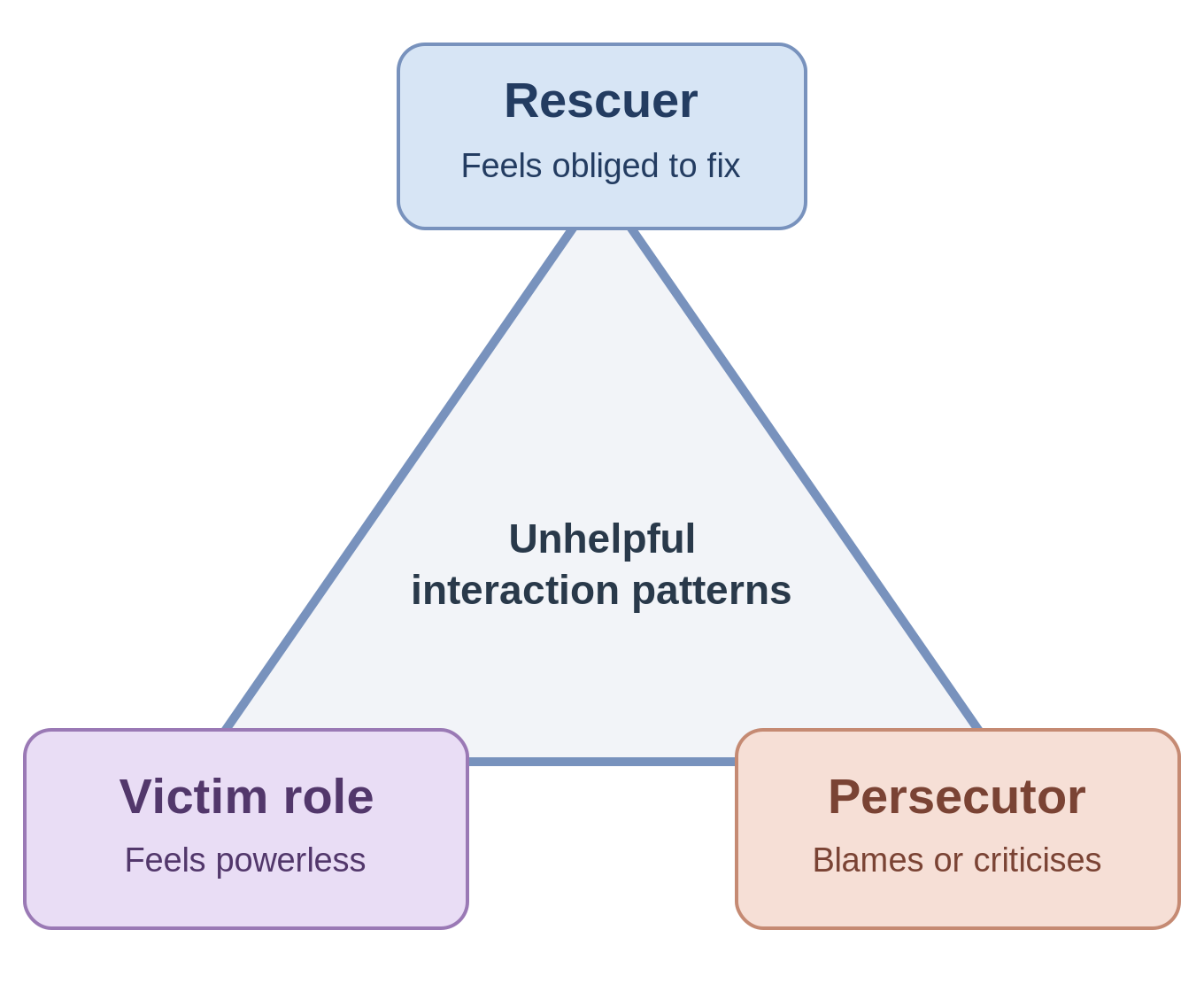
Figure 2. Karpman's Drama Triangle.
Recognising the Different Experiences of Mothers, Fathers and Partners
Although women frequently undertake a greater proportion of unpaid caring and household responsibilities, particularly when supporting children or family members with substantial additional needs, it is important not to assume that relationships involving autistic individuals are inevitably more likely to break down.
Nor should it be presumed that fathers or male partners are invariably the ones who leave when a relationship ends.
Relationship breakdown is rarely attributable to a single factor.
Financial difficulties, emotional exhaustion, communication problems, unequal caring responsibilities, differing expectations and a lack of practical or professional support may all contribute to difficulties within a partnership.
These pressures can affect any family, regardless of whether one of its members is autistic.
While some mothers find themselves assuming sole responsibility for an autistic child or dependent adult following separation, there are also fathers, husbands and male partners who become primary or sole carers, sometimes with equally limited financial, practical or emotional assistance.
The psychological consequences of becoming the principal carer should therefore be recognised without making assumptions based upon gender.
Feelings of abandonment, loneliness, anxiety, resentment and emotional exhaustion can affect anyone who is left managing substantial caring responsibilities without adequate support.
The central issue is not whether the remaining carer is a mother, father, husband, wife or partner, but the emotional, physical and financial consequences of being left to manage responsibilities that may previously have been shared.
When One Partner Leaves and the Other Becomes the Sole Carer
When a relationship ends, the consequences may be particularly significant for the parent or partner who remains responsible for providing the majority of care.
The remaining carer may suddenly become responsible for managing every aspect of daily life without the emotional, practical or financial assistance previously provided by their partner.
Responsibilities may include maintaining household routines, organising medical and educational appointments, supporting the autistic individual through periods of distress, managing finances and ensuring that other children or dependent relatives receive appropriate attention.
The loss of a partner may therefore represent considerably more than the end of a personal relationship.
It can also involve the loss of companionship, shared decision-making, financial security and the reassurance that another adult is available when difficulties arise.
For some individuals, this transition creates an overwhelming sense of responsibility.
A parent caring for an autistic child with substantial support needs may find that they have little opportunity to leave the house independently, meet friends or undertake activities that previously provided relaxation and enjoyment.
Even relatively ordinary activities, such as shopping, attending a medical appointment or visiting relatives, may require considerable planning.
If suitable respite services or trusted family assistance are unavailable, opportunities for personal time may become extremely limited.
The remaining carer may consequently feel that their life has become entirely organised around the needs of another person, with little consideration given to their own wellbeing.
The Emotional Consequences of Abandonment and Rejection
The departure of a partner can produce powerful feelings of rejection, abandonment, sadness and anger.
These emotions may become particularly intense when the remaining carer believes that the other partner has withdrawn because they were unwilling to share the responsibilities associated with supporting an autistic family member.
The individual may question why they have been left to manage circumstances that were previously considered a shared responsibility.
They may also experience conflicting feelings towards their former partner, including resentment about the apparent freedom enjoyed by the person who has left.
For example, a mother who remains responsible for an autistic child requiring extensive daily assistance may feel distressed that her former partner can continue working, socialising or pursuing personal interests while she has very limited opportunities to do the same.
Such feelings may be accompanied by guilt, particularly when the individual believes that expressing anger or frustration might be interpreted as resentment towards the autistic person.
It is essential to distinguish these emotions.
Resentment towards an unequal distribution of caring responsibilities is not the same as resentment towards the person receiving care.
The remaining parent or carer may love the autistic individual deeply while simultaneously experiencing anger, exhaustion or sadness about the circumstances in which they have been left.
These emotions deserve recognition and understanding rather than judgement.
Loneliness, Social Isolation and the Loss of Companionship
Following separation, loneliness may become one of the most persistent psychological difficulties experienced by the remaining carer.
The absence of another adult within the household can mean there is nobody immediately available to share concerns, discuss decisions or provide reassurance following a difficult day.
Even when the former partner was not particularly supportive, their departure may create an additional sense of emotional emptiness.
Friends and relatives may initially offer assistance, but this support can diminish over time as other people return to their own routines.
The remaining carer may gradually become reluctant to request help, particularly if they believe they are imposing upon others.
Social isolation may also increase when the autistic individual's support needs make spontaneous activities difficult.
Attending social gatherings, arranging holidays or maintaining friendships may require support that is not readily available.
The individual may begin to withdraw from social contact, not because they no longer value friendships, but because arranging opportunities to meet others has become too demanding.
For some carers, the most distressing aspect is not simply having nobody physically present, but having nobody with whom they can share the emotional responsibility of caring.
Anxiety, Constant Responsibility and Fear of the Future
Becoming the sole carer may create considerable anxiety about the future.
The individual may worry about what would happen if they became seriously ill, required hospital treatment or were temporarily unable to provide care.
For parents of autistic children or adults with substantial support needs, these concerns may extend to questions about future accommodation, financial security and long-term care arrangements.
A mother may ask herself who would support her child if she were no longer able to do so.
She may also worry about whether another family member would understand the child's communication preferences, sensory sensitivities, routines and emotional needs.
These concerns can become particularly distressing when there are few reliable alternatives available.
Some carers may become reluctant to leave the autistic individual with anyone else, particularly if previous experiences of inadequate support have undermined their confidence in services.
Although this reluctance may arise from understandable concerns, it can further restrict opportunities for rest and independence.
In some circumstances, the carer may begin to feel that they must remain constantly available, regardless of their own physical or psychological condition.
Financial Hardship and Loss of Employment Opportunities
Relationship breakdown may also create substantial financial difficulties, particularly when the remaining carer has reduced their employment or left work to provide support.
The loss of a second household income can place additional pressure upon an already demanding situation.
The remaining parent may face difficulties meeting mortgage or rental payments, household bills, transport costs and expenditure associated with the autistic individual's support needs.
Returning to employment may be challenging if suitable childcare, social care or flexible working arrangements are unavailable.
Even where the individual wishes to work, they may struggle to find employment compatible with unpredictable caring demands or frequent appointments.
Financial insecurity can therefore become closely connected with psychological distress.
The carer may experience anxiety about paying bills, maintaining suitable accommodation or providing opportunities for other children within the family.
They may also become increasingly dependent upon benefits, maintenance payments or financial assistance from relatives.
Where a former partner fails to contribute appropriately towards the care and financial support of dependent children, the resulting pressures may become more severe.
However, financial responsibilities following separation depend upon individual circumstances and applicable legal arrangements. Professional advice may be necessary to establish entitlement to maintenance, benefits and other forms of support.
The Effects on Physical and Mental Health
The combination of relationship breakdown, loneliness, financial insecurity and increased caring responsibilities may have substantial consequences for the remaining carer's health.
Some individuals experience persistent anxiety, depressive symptoms, sleep disturbances, chronic fatigue or stress-related physical difficulties, as discussed in Section 5.
Others may begin to neglect their own health because appointments, medication, exercise and opportunities for recovery are repeatedly postponed.
For example, a mother who has become the sole carer of an autistic child requiring continuous supervision may struggle to attend her own medical appointments because nobody is available to provide temporary assistance.
The problem can become self-perpetuating: declining health reduces the individual's ability to manage everyday responsibilities, while continuing responsibilities prevent adequate rest and recovery.
It is important that professionals recognise the remaining carer as an individual who may require assessment, treatment and practical assistance in their own right.
The Impact on the Autistic Child or Adult
Relationship breakdown may also affect the autistic individual, although experiences vary considerably.
Some autistic children and adults may find changes to household arrangements, routines and familiar relationships particularly difficult.
The departure of a parent or partner may introduce uncertainty, emotional distress or difficulties understanding what has happened.
A child may worry that they are somehow responsible for the separation, particularly if they have overheard disagreements concerning their support needs.
It is therefore essential that adults avoid suggesting, directly or indirectly, that the autistic person's diagnosis or support requirements caused the relationship to end.
Explanations should be appropriate to the individual's age, communication preferences and level of understanding.
Where safe and appropriate, maintaining predictable contact with both parents may provide reassurance and continuity.
However, arrangements must take account of the child's wellbeing, preferences and any safeguarding concerns.
Autistic adults may also experience grief, confusion or anxiety following changes in family relationships, particularly where they depend upon familiar people for practical or emotional support.
The individual's views should be respected, and they should be involved in decisions affecting their lives wherever possible.
The Effects on Other Children and Family Members
Where there are other children within the household, relationship breakdown and increased caring responsibilities may affect them as well.
Siblings may experience sadness about the separation, worry about the wellbeing of their remaining parent or feel that their own emotional needs receive insufficient attention.
In some families, older children may begin assisting with household responsibilities or providing support to their autistic brother or sister.
Although helping within a family can encourage empathy and cooperation, children should not be expected to assume inappropriate levels of responsibility or replace the role of an absent adult.
Some siblings may also feel guilty about wanting time with friends, participating in activities or pursuing opportunities that are difficult for their autistic sibling.
Providing opportunities for individual attention, emotional reassurance and age-appropriate activities can help protect their wellbeing.
The needs of the entire household should therefore be considered when assessing the consequences of relationship breakdown.
The Loss of Personal Identity and Opportunities for New Relationships
For some sole carers, the responsibilities of everyday life gradually leave little opportunity to develop personal interests, maintain friendships or establish new intimate relationships.
An individual may feel that they are no longer recognised as a person with their own ambitions, personality and emotional needs, but primarily as the parent or carer of someone requiring support.
This loss of personal identity can be particularly distressing following the end of a long-term relationship.
Some may wish to establish a new partnership but find that their caring responsibilities make meeting people or developing relationships difficult.
Others may feel reluctant to introduce someone new into the household because of concerns about disrupting established routines or exposing the autistic individual to unfamiliar circumstances.
There may also be anxiety about whether a prospective partner would understand or accept the family's circumstances.
However, the desire to maintain friendships, pursue interests or establish another relationship should not be regarded as selfish or incompatible with caring responsibilities.
The remaining carer has the same right to companionship, independence and a fulfilling personal life as anyone else.
The Importance of Practical, Emotional and Financial Support
The consequences of relationship breakdown can be considerably reduced when appropriate support is available.
Assistance may include access to counselling, reliable respite provision, financial advice, social care services, peer-support groups and help with employment or childcare arrangements.
Where a former partner remains involved, clear and realistic agreements about shared parenting, financial contributions and caring responsibilities may help reduce uncertainty and conflict.
However, such arrangements must be safe and appropriate, particularly where there has been domestic abuse, coercive control or other safeguarding concerns.
For carers who have little or no support from a former partner, professional services should recognise the additional pressures associated with managing responsibilities alone.
In Scotland, unpaid carers have rights relating to carer support and assessment. Adults who provide unpaid care can request an Adult Carer Support Plan, while young carers have access to Young Carer Statements. Parent carers may also receive support through relevant children's services arrangements.
These processes can help identify practical and emotional assistance, although the services offered depend upon individual circumstances and local eligibility criteria.
Importantly, support should not be limited to helping the carer continue providing assistance.
It should also recognise their own need for rest, social participation, personal development and emotional wellbeing.
7. Recognising Distress and Accessing Appropriate Support
Recognising When Psychological Distress Becomes Serious
Although stress, anxiety and emotional exhaustion can occur in demanding circumstances, prolonged psychological distress should not be dismissed as an unavoidable part of caring.
Some individuals may develop clinically significant anxiety, depression or other mental health difficulties that require professional assessment and treatment.
Warning signs may include persistent low mood, increasing withdrawal from others, severe sleep disturbance, feelings of worthlessness, loss of interest in previously enjoyable activities or a growing inability to manage everyday responsibilities.
In more serious circumstances, an individual may begin to feel hopeless about the future.
Early recognition is important.
Families, partners and carers should feel able to approach their GP, psychological services or appropriate support organisations without fear that requesting help will be interpreted as an inability to care for their autistic relative or partner.
Seeking psychological assistance is not an admission of failure. It is a reasonable response to sustained emotional pressure and an important means of protecting both individual wellbeing and the quality of relationships.
The Importance of Being Heard and Understood
One of the most valuable forms of assistance is the opportunity to speak openly with someone who listens, understands and does not minimise the individual's experiences.
This may involve professional counselling, peer-support groups, trusted friends, family members or organisations specialising in autism and caring responsibilities.
For some individuals, simply having their experiences acknowledged can reduce feelings of isolation and help restore confidence.
However, emotional reassurance alone is not always sufficient.
Where psychological distress arises from inadequate services, financial difficulties, unsuitable educational provision or excessive caring demands, practical changes are also necessary.
Support may therefore need to include accessible respite arrangements, assistance with appointments and advocacy, appropriate social care provision, financial guidance and opportunities for carers to maintain their own social and personal lives.
Importantly, such assistance should be developed collaboratively with autistic individuals wherever possible, respecting their preferences, independence and right to participate in decisions affecting their lives.
Supporting an autistic person should not require another individual to sacrifice their own psychological wellbeing.
Families, partners and carers need recognition, understanding and appropriate assistance, not simply encouragement to continue coping with circumstances that may already be overwhelming.
8. Where to Find Help and Support
Families, partners, carers and friends of autistic people may experience emotional, practical or financial difficulties. Although many families manage their circumstances successfully, others may require additional assistance, particularly when caring responsibilities become demanding or appropriate services are difficult to access.
Help may include emotional support, counselling, advice about benefits, assistance with education or employment, opportunities for respite, and guidance on accessing health and social care services.
Because health and social care arrangements differ across the United Kingdom, the following information is divided into Scotland, England, Wales and Northern Ireland.
Scotland
In Scotland, unpaid carers can request an Adult Carer Support Plan or, for younger carers, a Young Carer Statement. These help identify caring responsibilities, their effects on wellbeing and the assistance that may be required. Support can include advice, emotional assistance, financial guidance and opportunities for breaks from caring.
Organisations providing help
Provides information about carers’ rights, financial support, benefits, emotional wellbeing and managing caring responsibilities. It can help families understand what assistance they may be entitled to receive.
Offers information about care services, local carers’ centres, practical support and short breaks from caring. It is a useful starting point for identifying services available within a person’s local authority area.
Scottish Government — Carers’ Charter
Explains the rights of unpaid carers in Scotland, including support planning, involvement in decisions and access to information about available services.
Provides autism-specific information and support for autistic individuals, families and professionals. Its services and resources can help families better understand communication, sensory differences, relationships and individual support needs.
How to obtain support in Scotland: Contact your local authority social work department or local carers’ centre and ask about an Adult Carer Support Plan or Young Carer Statement. Families may also seek guidance from their GP and local autism support organisations.
England
In England, adult unpaid carers can request a carer’s assessment through their local council. This considers how caring responsibilities affect physical and emotional health, employment, relationships and everyday life. The assessment may identify assistance such as respite, practical help or access to local support groups.
Organisations providing help
Explains how to request a carer’s assessment, what the assessment involves and the types of support that may be recommended.
Works with local carer organisations to provide practical advice, emotional support and information about services for unpaid carers. It can help individuals identify support available in their area.
Contact — For Families with Disabled Children
Supports parents and families of disabled children, including autistic children. It provides information about education, benefits, services, family wellbeing and navigating the support system.
Provides information about autism, communication, sensory processing, education, employment, relationships and support services. Its resources can help autistic people and their families understand their rights and available assistance.
How to obtain support in England: Contact your local council’s adult social care department to request a carer’s assessment. Parents of disabled children can contact the council’s relevant children’s services team. A GP can also advise about mental health and wellbeing support.
Wales
In Wales, unpaid carers can request a carer’s needs assessment from their local authority. This considers how caring affects their wellbeing and identifies support that may help them continue caring while maintaining their own health and independence.
Organisations providing help
Provides advice about carers’ rights, financial assistance, benefits, emotional wellbeing and the practical challenges of supporting a family member or partner.
An information service that helps people find health, wellbeing and social care support in Wales, including community organisations, carers’ services and local assistance.
Provides autism and neurodivergence information, guidance and resources for autistic people, families, carers and professionals. Its materials aim to improve understanding and help individuals access appropriate support.
Supports families of disabled children and children with additional needs. It provides advice about services, education, benefits and family circumstances.
How to obtain support in Wales: Contact your local authority social services department to request a carer’s needs assessment. Dewis Cymru can help identify local organisations, while Neurodivergence Wales provides autism-specific information and resources.
Northern Ireland
In Northern Ireland, unpaid carers can request a carer’s assessment through their local Health and Social Care Trust. The assessment considers the carer’s own needs and may identify assistance such as emotional support, practical help, respite or adaptations within the home.
Organisations providing help
Provides information and advice about carers’ rights, financial assistance, benefits, emotional wellbeing and accessing support.
nidirect — Assessments for Carers
Explains how unpaid carers can request an assessment, what it involves and the assistance that may be available through Health and Social Care Trusts.
Provides autism-specific information, advice and support for autistic individuals and their families, including help with understanding autism and accessing appropriate services.
nidirect — Autism Support Services
Offers information about autism support across Northern Ireland, including local organisations, family support, services for children and adults, and autism-related community networks.
How to obtain support in Northern Ireland: Contact your local Health and Social Care Trust to request a carer’s assessment. Autism NI and the services listed through nidirect can help families identify autism-specific support.
Additional Support Available Throughout the United Kingdom
Alongside nation-specific services, several organisations offer information and assistance to people throughout the UK.
Provides information about caring responsibilities, benefits, employment rights, financial difficulties and emotional wellbeing. Its resources can help carers understand their rights and find assistance.
Offers autism-related information for autistic people, families, partners and carers, including guidance on relationships, communication, education and accessing services.
Provides confidential emotional support to anyone experiencing distress, loneliness, anxiety or difficulties coping with their circumstances. Telephone: 116 123, free to call, day or night.
Provides information and guidance about financial difficulties, debt, benefits, employment and housing. The services and arrangements vary between the four UK nations.
Seeking Professional Assistance
Where caring responsibilities, relationship difficulties or prolonged stress are affecting someone’s mental or physical health, professional assistance may be beneficial.
A GP can assess health concerns and advise about appropriate services. Local authority social care departments, carers’ centres and voluntary organisations may also provide information about practical assistance, respite, emotional support and financial guidance.
Families should remember that support is not restricted to the autistic individual. Partners, parents, siblings, carers and other family members may have their own needs that deserve recognition and appropriate assistance.
Seeking help should not be regarded as a failure or lack of commitment. Appropriate support can protect the wellbeing, dignity and independence of everyone involved.
Where someone is in immediate danger or requires emergency assistance, telephone 999.
Information about services, eligibility and availability may change. Readers should consult the linked organisations for current guidance.
Conclusion
The emotional and psychological experiences of families, partners, carers and friends are shaped by numerous factors, including the autistic individual's support needs, the quality of relationships, access to professional assistance and the availability of opportunities for rest and recovery.
While some families experience substantial pressures, others encounter relatively few difficulties, and many describe both challenges and positive experiences.
For those experiencing prolonged stress, loneliness, inadequate support or relationship breakdown, the consequences may extend far beyond temporary emotional discomfort.
They can affect mental and physical health, employment, financial security, personal relationships and the ability to maintain an independent and fulfilling life.
These pressures may become particularly severe when one individual assumes most or all caring responsibilities following separation, especially where reliable assistance is unavailable.
However, autism itself should not be presented as the inevitable cause of family hardship or relationship breakdown.
Many difficulties arise from unequal responsibilities, misunderstanding, inadequate services and the failure to recognise the needs of everyone involved.
The central consideration is not whether autism inevitably creates hardship, but whether individuals and families have access to the understanding, resources and practical support necessary to maintain healthy and fulfilling lives.
Recognising the wellbeing of families, partners, carers and friends is not separate from supporting autistic people. It is an essential part of creating respectful, stable and sustainable relationships in which everyone has the opportunity to thrive.