Autism, Empathy and Emotional Expression
Understanding emotional differences and their impact on relationships and everyday life.
One of the most common misconceptions about autism is that autistic people lack empathy and emotion. This perception can lead to autistic individuals being unfairly regarded as cold, insensitive, uncaring or emotionally detached. However, the apparent absence of empathy or emotion does not necessarily mean that these feelings do not exist. Autistic people may experience, recognise, process and express emotions differently. Some experience difficulty recognising another person’s emotional needs, whilst others experience emotions so intensely that they become overwhelmed. The difference between internal experience and outward expression can create misunderstandings across everyday life.
1. Understanding empathy and emotion
Empathy is not a single process. It involves recognising, understanding and responding to the experiences of another person.
| Type of empathy | Description |
|---|---|
| Cognitive empathy | Recognising and understanding what another person may be thinking or feeling. |
| Emotional (affective) empathy | Experiencing an emotional response to another person’s feelings. |
| Compassionate empathy | Recognising difficulties and feeling motivated to offer assistance. |
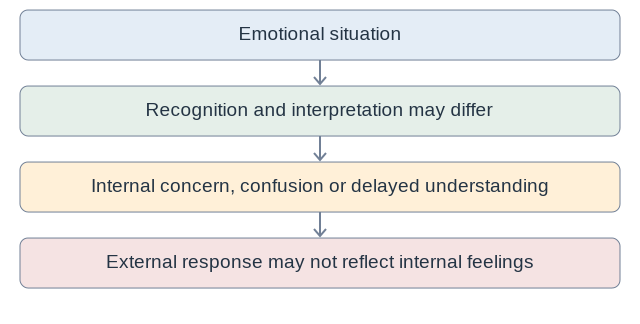
An autistic individual may struggle to recognise that their partner is upset, yet become deeply concerned once this is explained. Emotion also involves experiencing a feeling, identifying its cause, regulating its intensity, expressing it and responding to others. Difficulty in any of these processes can lead to an impression of emotional absence.
2. Do autistic people really lack empathy?
A 2025 systematic review of 226 studies found larger group differences in cognitive empathy than affective empathy. In higher-quality studies the affective difference was not statistically significant. Results varied according to the measurement used.1 Some individuals experience genuinely reduced emotional responsiveness, others have delayed recognition or difficulty expressing concern. None of these patterns can be assumed from an autism diagnosis alone.
3. Alexithymia – difficulties recognising and expressing emotions
Alexithymia describes difficulty identifying and communicating one’s own feelings. It is more common in autistic populations but is not exclusive to autism.2, 3 An individual may know something is wrong without knowing whether they feel anger, sadness, anxiety or disappointment.
| Emotional situation | Possible response |
|---|---|
| Sadness | Physical discomfort without identifying sadness. |
| Asked about feelings | Silence or “I don’t know”. |
| Affection | Difficulty expressing love verbally. |
| Distress | Withdrawal, irritability or overwhelm. |
| Bereavement | Little outward emotion or delayed grief. |
| Happiness | Enjoyment without an expected facial expression. |
Research has identified associations between difficulty describing emotions, social communication and anxiety.3
4. The relationship between interoception and emotional awareness
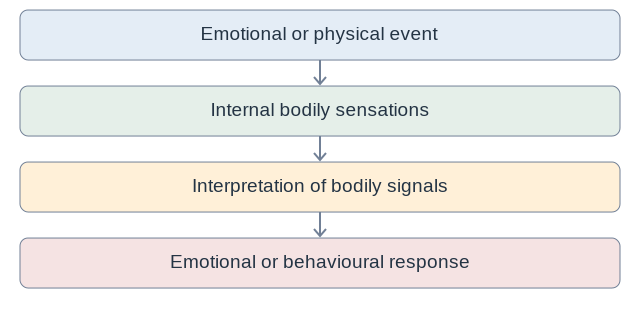
Interoception involves sensing internal bodily signals, including heart rate, breathing, muscle tension and stomach sensations. An individual may feel a racing heart without recognising anxiety, or confuse emotional distress and physical discomfort. Not all autistic people experience interoceptive difficulties and research remains ongoing.4
5. How reduced emotional responsiveness may manifest itself
Some autistic individuals may appear distant, fail to recognise a need for reassurance, rarely initiate affection, respond literally to emotional situations, or struggle to recognise changes in tone of voice or facial expression. They may not understand why a comment caused offence.
Logical rather than emotional responses. When a partner describes difficulties at work, the individual may immediately offer solutions rather than listen. This may be intended as practical help but experienced as dismissive.
Delayed emotional processing. Bereavement, arguments and unexpected news may initially be met with calmness, with their significance becoming apparent hours or days later. Silence does not establish indifference.
6. When empathy becomes overwhelming
Some autistic people describe intense emotional sensitivity, sometimes informally called hyper-empathy. Witnessing suffering, animal mistreatment or upsetting news can become overwhelming. Withdrawal may be a way of managing distress rather than evidence of a lack of concern. Research identifies variation in emotional responses, including increased personal distress in some autistic groups.1
7. The Double Empathy Problem
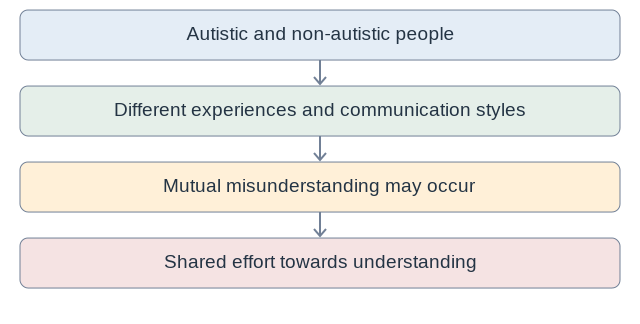
Damian Milton’s Double Empathy Problem proposes that social misunderstanding can be reciprocal: people whose experiences and communication styles differ may struggle to understand each other.6 This challenges the assumption that the entire burden of adaptation lies with the autistic person.
8. The impact on families
Family life relies on affection, reassurance and recognising when others need support. Parents may interpret a child’s limited outward affection as rejection, although the child may show attachment through shared interests, companionship or seeking security.
Autistic parents may struggle to recognise when children need reassurance rather than practical advice. They may nevertheless provide stability, protection and dedicated care. Autism does not determine whether someone is a loving or effective parent. Siblings may feel overlooked when their needs are not recognised; age-appropriate explanations and mutual support can help without dismissing anyone’s feelings.
9. The impact on marriages and intimate relationships
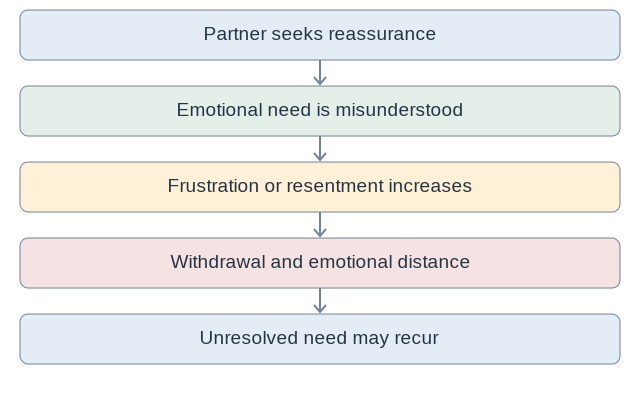
A relationship requires more than shared responsibilities. An individual may love their partner but struggle to show it in a way their partner recognises. A partner may feel emotionally lonely despite living with someone loyal and dependable. If they repeatedly initiate affection, emotional conversations and reconciliation, resentment and exhaustion can develop. The autistic partner may feel confused or unfairly criticised.
| What a partner may require | Alternative expressions of affection |
|---|---|
| Verbal expressions of love | Loyalty and commitment. |
| Physical affection | Spending time together. |
| Emotional reassurance | Practical assistance. |
| Romantic gestures | Meaningful or useful gifts. |
| Emotional conversation | Discussing shared interests. |
| Recognition of distress | Helping when directly asked. |
| Appreciation | Undertaking household responsibilities. |
During arguments, concentrating on factual accuracy rather than acknowledging hurt may intensify conflict. Both partners deserve support and respect. Autism does not justify abuse, intimidation or persistent disregard of another person’s needs.
10. The impact on friendships
An autistic individual may rarely initiate messages, forget significant events, miss signs of distress or speak extensively about their interests. They may regard a person as a close friend despite months without contact, whilst the friend interprets silence as disinterest. Repeated misunderstandings may lead to loneliness despite a desire for companionship. Explicit expectations and agreed ways of keeping in touch can help.
11. The impact on autistic children in school
Schools require children to interpret social rules and emotional expectations. A limited visible response may be mistaken for defiance or lack of remorse, leading to inappropriate discipline instead of support.
| Situation | Potential difficulty |
|---|---|
| Classmate upset | Recognising a need for comfort. |
| Teacher disappointed | Interpreting tone of voice. |
| Group activities | Recognising others’ emotional needs. |
| Playground disagreements | Understanding another perspective. |
| Discipline | Appearing indifferent despite distress. |
| Bullying | Recognising harmful intentions or communicating distress. |
A child may spend the school day controlling emotional responses and interpreting social situations. At home accumulated stress may emerge as crying, irritability, meltdowns or shutdowns. A safe environment may allow the child to stop masking.
12. The impact on college and university students
Further education brings additional independence, group work, social expectations and sometimes shared accommodation. Students may struggle to interpret criticism, sarcasm or the emotional needs of flatmates. Difficulty communicating distress may delay access to university support, contributing to isolation, anxiety or academic disruption. Clear academic expectations, mentoring and accessible disability services can help.
13. The impact within the workplace
An autistic employee may possess considerable technical or professional ability whilst encountering difficulties with interpersonal expectations.
| Workplace behaviour | Possible interpretation by colleagues |
|---|---|
| Direct factual communication | Rudeness or insensitivity. |
| Limited facial expression | Disinterest. |
| Offering solutions | Failure to acknowledge concerns. |
| Avoiding emotional conversations | Unwillingness to cooperate. |
| Missing signs of frustration | Lack of consideration. |
| Calm during a crisis | Emotional detachment. |
| Difficulty expressing distress | Appearing to cope without support. |
Misunderstandings can affect appraisals and promotion. Clear expectations, reasonable adjustments and appropriate training can support employees. Calmness, objective assessment and practical problem-solving can also be valuable strengths.
14. Masking and its impact on emotional expression
Masking may involve consciously remembering to smile, offer reassurance or display expected emotional reactions. Continual monitoring can increase stress, anxiety and exhaustion. Over time an individual may become more irritable, withdrawn or prone to overload. Family members may notice reduced emotional availability after a demanding day. This may reflect diminished capacity to maintain masking rather than a diminished capacity to care.6, 5
15. Does reduced empathy and emotional expression become worse with age?
Autism is lifelong and is not itself a degenerative condition. There is insufficient evidence that empathy inevitably deteriorates with age. The 2025 review did not find age to explain differences in empathy measures.1 This does not rule out changes within individuals over time.
Long-term masking, family responsibilities, health changes and autistic burnout may make emotional regulation and communication more difficult. Burnout research describes exhaustion, loss of functioning and reduced tolerance of demands.5
| Contributing factor | Potential impact |
|---|---|
| Chronic pain | Reduced patience. |
| Physical illness | Less energy for interaction. |
| Sleep disturbances | Irritability and reduced regulation. |
| Anxiety | Increased focus on worries. |
| Depression | Emotional numbness or loss of interest. |
| Hormonal changes | Changes in stress tolerance. |
| Bereavement | Distress or withdrawal. |
| Retirement | Changes to routines and social contact. |
| Long-term masking | Reduced capacity to sustain expected behaviour. |
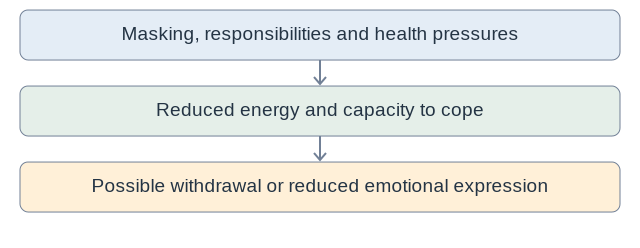
Partners may notice less affection, greater irritability or increased withdrawal. Significant changes in personality, memory or behaviour should be professionally investigated rather than attributed automatically to autism or ageing.
16. Interventions and strategies
Interventions should improve communication, emotional awareness and wellbeing, not force people to conceal autistic characteristics. Emotional diaries can help connect events, body sensations and feelings.
| Emotion | Possible physical indicators |
|---|---|
| Anger | Muscle tension or warmth. |
| Anxiety | Racing heart or sweating. |
| Sadness | Tearfulness or low energy. |
| Frustration | Restlessness or tension. |
| Happiness | Energy or relaxation. |
| Overload | Exhaustion or urge to withdraw. |
These indicators are not diagnostic; physical symptoms may have medical causes.
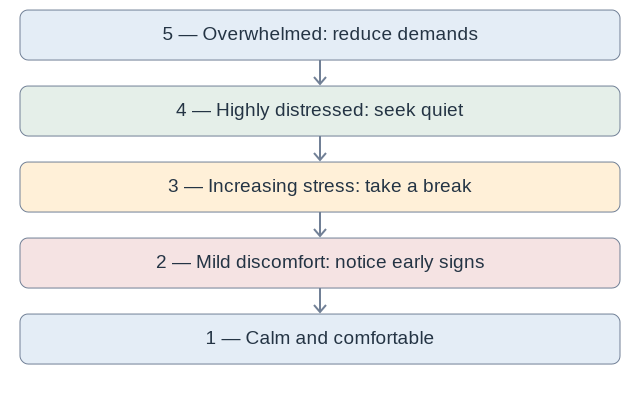
Direct communication may reduce assumptions in relationships.
| Indirect communication | Alternative direct communication |
|---|---|
| You should know what is wrong. | I am upset and would like to talk. |
| You never listen. | Please listen without offering a solution. |
| You do not care. | I need reassurance and affection. |
| Why are you insensitive? | What you said hurt my feelings. |
| Leave me alone. | I need quiet time before we continue. |
| You have changed. | I have noticed withdrawal and am concerned. |
Questions such as “Would you like me to listen or help solve the problem?” can clarify emotional needs. Partners can discuss different ways of expressing affection and agree on achievable changes. Autism-adapted psychological support, counselling, occupational therapy and communication support may help according to individual needs. NICE guidance describes adaptations to interventions for autistic people.7, 8 No medication is established as a treatment for empathy differences; coexisting conditions may warrant treatment.
17. Interventions within education and employment
| Environment | Potential interventions |
|---|---|
| Primary school | Visual communication aids and quiet spaces. |
| Secondary school | Named support staff and anti-bullying measures. |
| College | Individual support plans and mentoring. |
| University | Disability support, counselling and clear expectations. |
| Workplace | Reasonable adjustments and clear written instructions. |
| Home | Agreed boundaries and recovery time. |
| Later life | Health reviews and adjusted responsibilities. |
Support should be available throughout life. Families, educators and employers also have a responsibility to adapt communication and reduce barriers.
18. Recognising when professional support is required
Seek appropriate professional support when emotional withdrawal, anger, exhaustion, meltdowns, social isolation or deteriorating relationships significantly affect daily life. Loss of interest, changes in personality and difficulty maintaining education or employment may warrant assessment. Professionals can explore burnout, alexithymia, anxiety, depression, physical illness or other causes. Partners and family members may also need independent support.
19. Looking beyond outward behaviour
| What other people may see | What the autistic individual may be experiencing |
|---|---|
| Coldness | Difficulty expressing affection. |
| Indifference | Uncertainty about the appropriate response. |
| Selfishness | Difficulty recognising another person’s needs. |
| Rudeness | Direct communication without intention to offend. |
| Emotional detachment | Exhaustion. |
| Lack of remorse | Difficulty communicating regret. |
| Withdrawal | Need to recover. |
| Lack of interest | Difficulty initiating interaction. |
| Irritability | Accumulated stress. |
These are possible explanations, not assumptions about all individuals. Intentions and the consequences of actions both matter.
20. The Author’s Personal Experience of Empathy and Emotional Expression
Throughout their life, the author has experienced considerable difficulty recognising when other people are emotionally distressed or require emotional support. As discussed earlier in this article, the author often displays an almost absent or distant facial expression during emotionally challenging situations. This outward appearance of emotional detachment can inadvertently intensify another person’s distress, particularly when they are seeking reassurance, understanding or compassion. This has occurred on numerous occasions within the author’s relationship with their partner.
Prior to the author’s formal diagnosis of Asperger syndrome, their partner frequently questioned why the author displayed what appeared to be such a cold and emotionally detached response. Similar difficulties have arisen in relationships with other family members and friends. These responses were not necessarily indicative of an absence of concern, but rather a difficulty recognising, processing and expressing emotions in a manner that others could understand.
One of the few occasions on which the author recalls displaying significant emotion was following the sudden death of their father. On reflection, however, much of this emotional response centred upon the uncertainty and fear associated with the loss of their father’s guidance, logical reasoning and ability to resolve problems.
The author’s grieving process appeared to be influenced more by the implications of the loss and the uncertainty surrounding their future than by the bereavement itself. Their immediate thoughts were centred upon questions such as, “What do I do now?” and “How will I cope without him?”
Conversely, the author has experienced and openly expressed profound grief following the death of their pets. Throughout their life, the author has developed strong emotional attachments to animals, frequently placing their lives and welfare above those of other people.
These contrasting experiences illustrate the complexity of empathy and emotional expression. They demonstrate that empathy and emotion are not necessarily absent but may be selective, influenced by the nature of an emotional attachment, personal circumstances and the individual’s ability to process emotional experiences.
Whilst these observations reflect the author’s personal lived experience and should not be regarded as representative of all autistic individuals, they provide an insight into how differently empathy, emotional attachment and grief can manifest themselves.
The author’s partner frequently uses the expression, “When you have met one autistic person, you have met only one autistic person.” By this, they mean that every autistic individual is unique, with their own personality, characteristics, abilities, challenges and emotional experiences. Although autistic individuals may share certain characteristics, the way in which these manifest themselves can differ considerably from one person to another. This is particularly relevant when discussing empathy and emotion, as some autistic individuals may experience heightened emotional sensitivity, whilst others may struggle to recognise, experience or express certain emotions. It is therefore important to avoid generalisations and recognise that the personal experiences described by the author throughout this article are not necessarily representative of all autistic individuals.
21. Conclusion
The belief that autistic individuals are incapable of empathy, love, affection and compassion is an inaccurate generalisation. Nevertheless, genuine difficulties recognising, processing and responding to emotions can have consequences for individuals, families, partners, friends and colleagues.
An individual may love their partner whilst struggling to demonstrate affection, or experience concern without being able to communicate it. Difficulties may become more apparent in later life when combined with masking, burnout and ill health, without necessarily indicating diminished empathy.
Emotional awareness, communication, appropriate support and mutual recognition of different forms of affection can help strengthen relationships. Both autistic individuals and those around them deserve to have their emotional needs recognised.
The inability to demonstrate an emotion should never automatically be interpreted as the inability to experience it.
22. Scientific Articles and References
1. Cusson NM et al. (2025).
A systematic review and meta-analysis of empathy in autism: The influence of measures.
Clinical Psychology Review, 120, 102623. Examines differences across empathy measures.
2. Kinnaird E et al. (2019).
Investigating alexithymia in autism: A systematic review and meta-analysis.
European Psychiatry. Reviews alexithymia in autistic populations.
3. Oakley BFM et al. (2022).
Alexithymia in autism: cross-sectional and longitudinal associations with social-communication difficulties, anxiety and depression symptoms.
Psychological Medicine, 52, 1458–1470.
4. Butera CD et al. (2023).
Relationships between alexithymia, interoception, and emotional empathy in autism spectrum disorder.
Autism, 27(3), 690–703.
5. Raymaker DM et al. (2020).
Defining Autistic Burnout.
Autism in Adulthood, 2(2), 132–143. Research on exhaustion and reduced functioning.
23. Further Reading, Clinical Guidelines and Support Strategies
6. National Autistic Society.
Autism and communication.
Information on communication differences and mutual understanding.
7. NICE.
CG142: Autism spectrum disorder in adults: diagnosis and management.
Clinical guidance on individualised support.
8. NICE.
CG170: Autism spectrum disorder in under 19s: support and management.
Clinical guidance on support for children and young people.